KUALA LUMPUR, Nov 21 ― The Malaysian Anti-Corruption Commission (MACC) said today it will investigate a Chinese businessman with reportedly close ties to politicians in the ruling Barisan Nasional (BN) coalition had used his links to help his company profit from a lucrative iron ore mining deal in Bukit Besi, Terengganu earlier this year.
MACC’s head of investigations Datuk Mohd Jamidan Abdullah said the commission viewed the allegations seriously and will seek to meet with Li Yang, the chairman and chief executive of Chinese-controlled CAA Resources who had detailed his dealings with an interview with the New York Times (NYT) recently.
“The MACC views the claims made by Li Yang seriously… we will meet with Li Yang to get further details,” Jamidan said in a statement.
The MACC official also noted that the Li Yang's revelation that his “Datuk” titles were purchased was a serious allegation and an affront to Malaysia's monarchy.
“The allegations made by Li Yang can damage the reputation of the Palace where a middle man is taking advantage is likely to have tried and solicit money from businessmen.
“The MACC would take serious and stern action if it was indeed found that bribes were paid to facilitate businesses,” he said.
Jamidan added that the MACC had in the past charged and convicted those found guilty in such cases, citing one case where a contractor was jailed for five years and fined RM50,000 for trying to solicit money for the title “Datuk Seri” from the Perak palace.
Li Yang had recently told the NYT in a report published yesterday that with the support of national leaders and the royalty, “you can do anything you want” in Malaysia.
“If you’ve got these two to support you, then you can do anything you want, because the natural resources are all controlled by them,” he was quoted saying by the widely-read American newspaper.
The article went on to claim that the China national had paid for each of the “ruling party politicians” with indirect stakes in the mines to receive the “Datuk” titles. Each title cost him some US$100,000 (RM330,000).
The NYT observed that although such agreements are deemed as corruption by some groups here, Yang said he was just following what he believed was a common practice in Malaysia.
Adding to that, Yang’s company has also circumvented a requirement to prepare an environmental impact assessment (EIA) for its operations by erecting an eight-foot-high corrugated-steel fence across the middle of the site and calling it two mines, the NYT wrote.
The paper said that as the size of each of CAA’s “two” mines is below 500 acres, there was no need for an EIA approval from local environmental regulators.
With license in hand, CAA Resources is now clearing Bukit Besi, famously known as “Iron Hill”, which was once the site of the world’s largest iron ore mine.
In 1971, however, the mine was closed, reportedly due to depleting iron ore, bureaucracy and union troubles, and has remained somewhat idle for the next four decades.
But CAA Resources, having sidestepped local curbs, now sees potential in its “Iron Hill” investment, despite the plummeting global prices of iron ore.
- See more at: http://www.themalaymailonline.com/malaysia/article/on-heels-of-nyt-report-macc-opens-book-on-politically-linked-chinese-nation#sthash.QkZOyPig.dpuf

"....semua makhluk ciptaan Tuhan samada manusia,binatang,tumbuhan, alam semulajadi dan sebagainya,saling perlu memerlukan,saling bantu-membantu kerana mereka berkait,terikat antara satu sama lain dalam satu kitaran yang berhubungan. Justeru, jangan diputuskan ikatan itu, kelak, seluruh kitaran akan musnah..." Ahmad Rais Johari
Monday, November 24, 2014


10 Lombong Emas Terbesar Di Dunia
Salah satu cara bagi mendapatkan emas ialah melalui kaedah perlombongan. Kita tidak tahu bila dan di mana lokasi pertama emas pertama dilombong tetapi para sejarawan mengatakan bahawa emas mula dilombong sekitar 7000 tahun yang lalu.
Lombong emas terbesar di dunia mengikut kepada pengeluaran tahunan masing-masing.
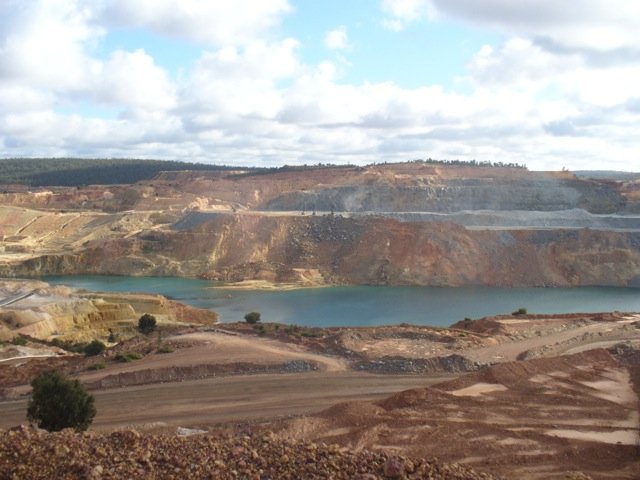
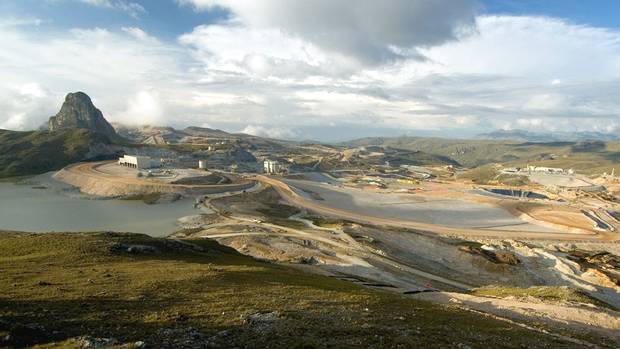


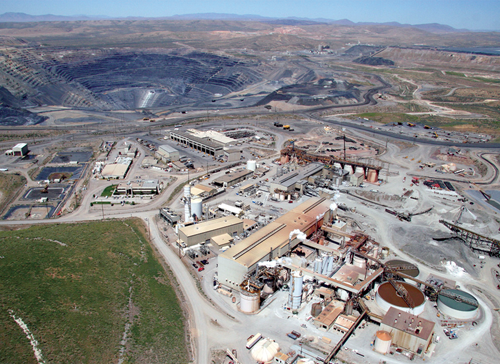

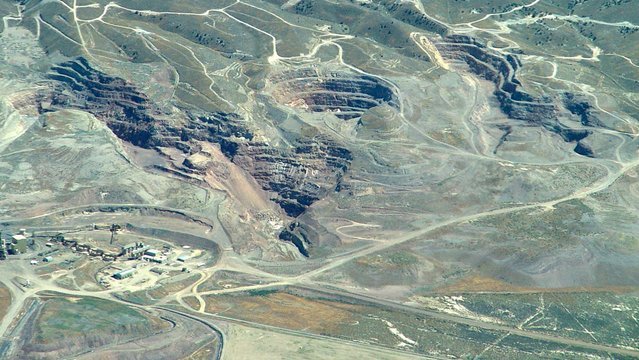

Lombong emas terbesar di dunia mengikut kepada pengeluaran tahunan masing-masing.
Selamat membaca !
10. Lombong Boddington (Australia)
Lombong ini dibuka semula pada Februari 2010. Lombong Emas Boddington menghasilkan 23,045 kg emas pada tahun 2011. Ia merupakan salah sebuah lombong emas yang terbesar di Australia dan juga dunia. Dalam setahun lombong ini juga menghasilkan puluhan ribu kilogram tembaga. Lombong ini dimiliki oleh Normandy Mining, Acacia Resources and Newcreast Mining.
9. Lagunas Norte (Peru)
Lagunas Norte terletak di utara Peru dan dimiliki oleh Barrick Gold Corp. Ianya juga merupakan lombong emas kedua terbesar di Peru. Lagunas Norte menghasilkan 25,188 kg emas pada tahun 2010. Syarikat pengusaha lombong ini sedang giat mengembangkan lagi projek perlombongan di tapak ini yang mana akan meningkatkan lagi jumlah pengeluaran sehingga ke tahun 2016. Lombong ini dipercayai mempunyai jumlah emas sebanyak 205,283 kg.
8. West Wits (Afrika Selatan)

Operasi perlombongan emas di West Wits dipercayai merupakan operasi perlombongan terdalam buat masa ini. Western Wits terdiri daripada 3 lombong utama iaitu Mponeng, Savuka dan lombong Tautone yang merupakan lombong paling dalam di dunia. Pada tahun 2011, Western Wits menghasilkan 24,634 kg emas di mana 7,589 kg daripadanya dihasilkan daripada lombong Tautone. Keseluruhan Western Wits yang terdiri daripada tiga lombong emas adalah dimiliki oleh AngloGold Ashanti.
7. The Super Pit (Australia)

Lombong emas The Super Pit merupakan tarikan utama pelancongan di Kalgoorlie, Barat Australia. Lombong emas ini merupakan lombong emas ‘lubang terbuka’ yang terbesar di Australia seperti yang dapat kita lihat pada gambar di atas. Ia menghasilkan 21,461 kg emas pada tahun 2009. Lombong ini dimiliki oleh Kalgoorlie Consolidated Gold Mine Pty Ltd., iaitu syarikat yang 50% dimiliki oleh Barrick Gold Corp. dan 50% lagi dipegang oleh Newmont Mining Corporation.
6. Vaal River (Afrika Selatan)

Ia merupakan operasi perlombongan emas di bawah tanah yang dimiliki oleh AngloGold Ashanti. Ia terdiri daripada beberapa lombong emas bawah tanah antaranya ialah Great Noligwa, Kopanang dan lombong Moab Khotsong. Ia menghasilkan 25,847 kg emas pada tahun 2011 dan rizab keseluruhan Great Noligwa yang terbukti adalah sebanyak 37,324 kg emas manakala lombong Kopanang memiliki rizab yang terbukti sebanyak 311,035 kg emas.
5. Veladero (Argentina)

Lombong emas Veladero merupakan lombong emas ‘lubang terbuka’ yang terbesar di Argentina. Ianya juga dimiliki oleh Barrick Gold Corporation. Pada tahun 2009, Veladero menghasilkan 19,000 kg emas dan ia mempunyai output sebanyak 27,993 kg emas pada tahun lalu. Veladero mempunyai rizab emas yang terbukti sebanyak 373,242 kg emas.
4. Goldstrike (Amerika Syarikat)
Goldstrike terletak di Nevada, Amerika Syarikat dan dimiliki oleh Barrick Gold Corporation. Goldstrike terdiri daripada tiga lombong emas – satu lubang terbuka iaitu lombong Betze-Post dan dua lagi lombong emas bawah tanah iaitu lombong Meikle dan Rodeo. Dicampur penghasilan ketiga-tiga lombong emas ini pada 2011 menghasilkan output sebanyak 33,840 kg emas. Rizab keseluruhan Goldstrike yang terbukti adalah sebanyak 379,462 kg emas.
3. Yanacocha (Peru)

Lombong emas Yanacocha merupakan lombong emas yang terbesar di Amerika Selatan. Yanacocha terdiri daripada lima lombong emas ‘lubang terbuka’. Ia menghasilkan emas sebanyak 40,217 kg pada tahun 2011. Lombong emas ini dimiliki oleh Newmont Mining Corporation, Beunaventura Group dan IFC.
2. Cortez (Amerika Syarikat)
Lombong emas Cortez terdiri daripada beberapa siri lombong emas lubang terbuka dan juga lombong-lombong emas bawah tanah. Ia merupakan lombong emas kedua terbesar di dunia dan yang terbesar di Amerika Utara berdasarkan kepada saiz dan jumlah pengeluarannya. Pada tahun 2011 sahaja ia menghasilkan 44,198 kg emas dan memiliki rizab emas yang terbukti sebanyak 451,000 kg emas. Ianya juga dimiliki oleh Barrick Gold Corporation. Untuk pengetahuan anda, lombong emas Cortez juga merupakan antara lombong emas tertua yang masih beroperasi. Ia mula beroperasi pada tahun 1862.
1. Grasberg (Indonesia)

Lombong emas Grasberg merupakan lombong emas terbesar di dunia! Bukan setakat itu sahaja, malah Grasberg juga merupakan lombong tembaga ketiga terbesar berdasarkan kepada saiz dan juga pengeluarannya. 60% pemilikannya dimiliki oleh syarikat Freeport-McMoran Copper & Gold Inc. manakala baki selebihnya dimiliki oleh Rio Tinto. Ia menghasilkan 44,913 kg emas sekaligus menjadikan pengeluaran yang terbesar untuk tahun 2011. Apa yang lebih menarik, lombong Grasberg ini memberikan kepada kira-kira 20,000 orang peluang pekerjaan.
Saturday, November 22, 2014
Presiden Jokowi Menghadiri Konvoksyen Anaknya di Singapura dengan Kapalterbang Kelas Ekonomi
“Ya (ekonomi). Enggak (VVIP). Ini pak Jokowi jadi pergi sebagai Joko Widodo, bukan presiden,” kata Sekretaris Kabinet Andi Widjajanto di Istana Negara, Jakarta, Kamis (20/11). seperti yang dimaklumkan kepada beritasatu.com
Jokowi dan isterinya, Iriana dijadualkan akan berada di Singapura hingga Sabtu (22/11) pagi.
Andi menjelaskan bahawa kehadiran Jokowi di Singapura adalah acara keluarga dan bersifat peribadi, beliau hanya membawa bersamanya pegawai pengiring dan penjaga keselamatan dalam jumlah yang kecil. Malahan semua kos lawatan tersebut dibiayai oleh beliau sendiri tanpa menggunakan wang kerajaan kecuali kos pegawai pengiring dan penjaga keselamatan beliau.
Di Singapura beliau masih belum membuat keputusan samada tinggal di hotel atau di wisma Kepresidenan.
“Ini acara pribadi, menghadiri wisuda putranya di Singapura. Kaesang,” tambah Andi lagi.
Pihak kerajaan Singapura telah mengatur acara sambutan bukan kenegaraan untuk menyambut Jokowi dan Isteri sebaik sahaja tiba di Singapura.
“Pulang Sabtu, karena wisudanya jam setengah 10 malam kalau enggak salah,” lanjut Andi lagi.
Friday, November 21, 2014
13 pelajar UiTM sesat di Gunung Datuk
 |
| Foto Sitie Nurhajatulzeimah Mohd Noor |
REMBAU: Seramai 13 pelajar Universiti Teknologi MARA (UiTM) Kampus Seremban, sesat ketika menuruni Gunung Datuk di sini, petang tadi.
Ketua Polis Daerah Rembau, Deputi Superintendan Ibrahim Sharif, berkata mereka, termasuk enam pelajar perempuan, mendaki gunung itu pada jam 7.30 pagi, tanpa melaporkan kepada renjer Jabatan Perhutanan.
Katanya, mereka dipercayai tidak mengikut laluan sepatutnya ketika menuruni gunung itu pada jam 11.30 pagi dan menghubungi renjer berkenaan pada jam 2 petang selepas gagal menemui laluan sebenar.
"Renjer berkenaan kemudian memaklumkan kepada polis mengenai kejadian itu pada jam 3.30 petang. Selepas berhubung dari semasa ke semasa dengan mereka menggunakan telefon bimbit, lokasi mereka berjaya dikenal pasti pada jam 6.40 petang, iaitu di laluan ke Gunung Gagak," katanya.
Ibrahim berkata, pasukan mencari dan menyelamat yang disertai oleh 50 orang, termasuk polis, Jabatan Bomba dan Penyelamat, Jabatan Pertahanan Awam Malaysia (JPAM) serta penduduk kampung, ditubuhkan untuk mengesan pelajar berkenaan.
Katanya, pelajar berkenaan yang berumur antara 20 hingga 23 tahun berada dalam keadaan selamat dan usaha sedang dilakukan untuk pergi ke lokasi mereka.
Sementara itu, Pegawai Operasi dari Balai Bomba dan Penyelamat Rembau, Penolong Penguasa Bomba Mohd Ridwan Abd Rahman, berkata pihaknya menerima panggilan kecemasan pada jam 5.13 petang dan tiba di tempat kejadian pada jam 5.39 petang.
Katanya, operasi mendaki dimulakan pada jam 6.40 petang dan percaya pelajar berkenaan akan dapat dijumpai.
(Sumber - http://www.bharian.com.my/node/18844)
Tiada lagi subsidi RON95, diesel - TERKINI
Putrajaya: Kerajaan memutuskan penetapan harga runcit bagi petrol RON95 dan diesel mengikut kaedah pengapungan terkawal berkuatkuasa 1 Disember ini.
Menteri Perdagangan Dalam Negeri, Koperasi dan Kepenggunaan Datuk Seri Hasan Malek berkata, kaedah berkenaan adalah sebagaimana pelaksanaan penetapan harga runcit RON97 yang dilaksanakan sejak Julai 2010.
Menurutnya, ini bermakna subsidi bagi RON95 dan diesel akan dihapuskan.
"Harga runcit produk petroleum di negara ditentukan melalui kaedah Mekanisme Harga Automatic (APM) sejak 1983.
"Melalui APM, kerajaan akan menetapkan harga runcit pada satu paras tertentu di mana perubahan kos produk tidak akan mengubah harga runcit," katanya.
Bagaimanapun, beliau berkata, melalui pengapungan terkawal itu, purata perubahan kos produk akan menentukan penetapan harga bagi bulan berikutnya.
(Sumber - http://www.hmetro.com.my)
Menteri Perdagangan Dalam Negeri, Koperasi dan Kepenggunaan Datuk Seri Hasan Malek berkata, kaedah berkenaan adalah sebagaimana pelaksanaan penetapan harga runcit RON97 yang dilaksanakan sejak Julai 2010.
Menurutnya, ini bermakna subsidi bagi RON95 dan diesel akan dihapuskan.
"Harga runcit produk petroleum di negara ditentukan melalui kaedah Mekanisme Harga Automatic (APM) sejak 1983.
"Melalui APM, kerajaan akan menetapkan harga runcit pada satu paras tertentu di mana perubahan kos produk tidak akan mengubah harga runcit," katanya.
Bagaimanapun, beliau berkata, melalui pengapungan terkawal itu, purata perubahan kos produk akan menentukan penetapan harga bagi bulan berikutnya.
(Sumber - http://www.hmetro.com.my)
Daya Produktivi Tinggi Perlu Untuk Maju - Y.B.M. Tengku Razaleigh Hamzah
Bismillahhirrahmannirrahim,
Assalamualaikum warahmatullahi wabarakatuh dan salam sejahtera.
Saya bersyukur ke hadhrat Allah SWT atas keizinan dan kurniaNya kita dapat berkumpul di Majlis Penyampaian Hadiah bagi Kolej Yayasan Saad pagi ini. Saya sangat berterima kasih kepada pihak Kolej yang menjemput saya ke Majlis ini yang saya kira satu penghormatan bagi saya. Bidang pendidikan selain bidang ekonomi sangat-sangat menarik minat diri saya; walaupun saya seorang ahli politik, “education is in my blood”, dan kedua-dua bidang ekonomi dan pendidikan adalah penting bagi negara kita untuk maju ke depan dan bagi anak bangsa kita menghadapi cabaran-cabaran yang mendatang.
2. Sebagai anak didikan dan pewaris dalam politik kepada Allahyarham Tun Abdul Razak, Perdana Menteri Malaysia kedua dan pengasas Dasar Pendidikan Negara, saya sentiasa mengikuti perkembangan dalam bidang pendidikan, terutama kesannya ke atas pembangunan ekonomi dan masyarakat. Memang jauh perjalanan kita sejak era Tun Razak, tetapi kebelakangan ini nyata beberapa trend yang mengkhuatirkan saya. Perkara-perkara ini harus ditangani segera dan dengan bersungguh-sungguh jika kita ingin mencapai status negara maju, sejahtera, adil dan saksama.
Dif-dif yang dihormati sekalian,
3. Sejak merdeka, Kerajaan Malaysia telah banyak berbelanja dalam bidang pendidikan di semua peringkat dari bangku sekolah ke institusi pengajian tinggi. Belanjawan pendidikan bagi Malaysia sebagai pecahan dari Keluaran Negara Kasar adalah dua kali ganda negara-negara jiran dalam ASEAN, dan lebih tinggi dari Jepun dan Korea Selatan; malah ia standing dengan negara-negara maju dalam kumpulan OECD pada tahun 2011. Dalam tahun 2008, Malaysia ditarafkan tempat ke-16 di antara 102 negara bagi peratusan perbelanjaan kerajaan bagi pendidikan semua peringkat. Bagi tahun 2010, belanjawan pendidikan asas bagi seorang pelajar adalah tertinggi bagi Malaysia dibandingkan dengan negara Chile, Turki, Romania dan Mexico di antara negara-negara yang setara dengannya mengikut ukuran ketarafan kuasa beli [“purchasing power parity”]. Dalam Belanjawan 2015, Kerajaan telah memperuntukkan lebih RM56.7bilion, iaitu 21 peratus jumlah Belanjawan Kerajaan Persekutuan untuk tahun depan, yang merupakan yang terbesar di antara bidang-bidang belanjawan yang lain. Dari jumlah peruntukan bagi pendidikan, 21 peratus adalah untuk pengajian tinggi. Sangat nyatalah dari statistik yang diajukan ini bahawa Kerajaan Malaysia memang memberi tekanan kuat terhadap perbelanjaan pendidikan.
4. Yang malangnya, perbelanjaan pendidikan yang tinggi ini dibandingkan dengan Keluaran Negara Kasar tidak berbaloi, sekurang-kurangnya tidak memberi pulangan terhadap kualiti atau peningkatan penghasilan mutu dalam pendidikan. Dari segi perbelanjaan per kapita, Malaysia membelanja empat kali ganda untuk pendidikan tinggi berbanding pendidikan rendah dan menengah. Dari segi pulangan kepada pelaburan, ratio atau dividen pendidikan kerajaan harus memberi tekanan lebih kepada pendidikan rendah dan menengah, terutamanya yang boleh meningkatkan kemahiran. Dengan cara demikian, kedudukan ekonomi negara akan lebih baik jika taraf pendidikan kalangan tenaga kerja negara bertambah tinggi. Inilah satu-satunya cara untuk menaikkan negara ke taraf ekonomi bergaji tinggi [“high wage economy”], melalui peningkatan produktiviti. Bukan semata-mata mengejar ekonomi berpendapatan tinggi [“high income economy”] untuk mencapai status negara maju. Ini kerana lebih 85 peratus penduduk Malaysia merupakan orang yang makan gaji, bukan pemilik harta atau bekerja sendiri. “Menurut Perbadanan Produktiviti Malaysia (MPC), tahap produktiviti pekerja negara ini adalah jauh lebih rendah daripada negara-negara seperti Amerika Syarikat, Jepun, United Kingdom, Korea Selatan dan Singapura. Purata pekerja Malaysia mencatatkan nilai produktiviti hanya sebanyak RM43,952 setahun. Berbanding pekerja Amerika Syarikat mengungguli senarai dengan tahap produktiviti sebanyak RM285,558 setahun, diikuti oleh pekerja di Jepun RM229,568 dan Hong Kong RM201,485. Ini bermakna pekerja Malaysia bekerja dalam tempoh yang lebih panjang berbanding negara lain, namun menghasilkan pulangan yang lebih rendah.” “Hanya 80% dari tenaga kerja seluruh Malaysia mempunyai kelayakan pendidikan setakat Sijil Pelajaran Malaysia (SPM)”.
5. Yang lebih membimbangkan saya ialah kedudukan mutu penghasilan pelajaran negara kita. Walaupun membelanjakan begitu tinggi per kapita dalam perbelanjaan sektor pendidikan, kita masih ketinggalan mutu atau pencapaian pelajar-pelajar kita dibanding dengan negara yang setaraf dari segi pendapatan atau kuasa beli dengan kita. Sebagai perbandingan, dalam ujian TIMMS (Trends in International Mathematics and Science Study) bagi pencapaian matematik, Malaysia telah jatuh dari 520 dalam tahun 1999 kepada 440 bagi tahun 2011. Dan dalam TIMMS bidang sains, kedudukan kita telah menurun dari 510 dalam tahun 2003 kepada 426 tahun 2011 - menurun, bukan naik! Bagi ujian PISA (Programme for International Student Assessment) dalam sains, matematik dan bacaan pula, dalam tahun 2012 negara kita Malaysia berkedudukan bawah dari purata dunia bagi negara yang sama pendapatan negara per kapita. Jelaslah, walaupun kita banyak membelanjakan wang untuk pendidikan negara, iaitu lebih tinggi dari negara-negara lain setaraf dengan kita, mutu pencapaian negara kita mengikut ujian PISA, satu ukuran antarabangsa, pada puratanya lebih rendah dari apa yang kita harapkan untuk menuju kepada ekonomi yang berasaskan ilmu [“knowledge based economy”]. Keputusan ini menunjukkan pelajar-pelajar kita yang berumur 15 tahun menampakkan mereka ini berkedudukan 3 tahun lebih ke belakang jika dibandingkan dengan mereka yang umurnya yang sama daripada Singapura, Korea, Cina, Jepun dan termasuk daripada Vietnam yang dahulunya di belakang kita.
6. Dalam ukuran antarabangsa ini, dari jumlah 65 buah negara, kita berada pada tangga ke-59 dalam bacaan, tangga ke-52 bagi matematik, dan ke-53 dalam bidang sains. Tapi bagi pelajar kita yang di peringkat peratus ke atas, pencapaian kita dalam ketiga-tiga bidang tersebut adalah setanding dengan Korea Selatan dan Jepun. Memandangkan hal ini pada keseluruhannya, tidak hairanlah kerajaan kita perlu menumpukan perhatian yang lebih kritikal dalam hal belanjawan dan kesannya ke atas pencapaian dan mutu pendidikan di negara kita ini. Usaha ini terdapat dalam bentuk Blueprint Transformasi Pendidkan yang telah dilancarkan oleh kerajaan awal tahun ini. Saya berdoa semoga usaha ini berjaya mencapai sasaran demi kepentingan ekonomi dan generasi akan datang. Sehubungan dengan ini, kerajaan perlu mengkhusus bukan saja kepada prasarana yang baik, tetapi juga kepada keberkesanan kurikulum dan proses pengajaran serta pembelajaran, dan kualiti guru-guru yang mengajar anak-anak kita.
7. Cuba kita lihat kepada proses pembelajaran yang sangat penting bagi seseorang pelajar sebab ianya mempengaruhi bagaimana anak-anak murid maju dalam pembelajarannya. Kita hantar anak-anak kita untuk belajar, tidak ada lain sebab, supaya dia akan disediakan dengan ilmu dan kepandaian untuk berjaya apabila lulus dari persekolahan atau universiti. Tetapi, sistem pendidikan kita, sama ada di peringkat rendah, menengah atau tinggi, bergantung kuat kepada sistem berasaskan peperiksaan, bukan berasaskan pembelajaran, berasaskan discovery dan pemikiran kritikal. Pembelajaran “rote learning” atau membabi buta sahaja tidak akan membolehkan pelajar untuk meningkatkan daya fikir dan daya penyelesaian masalah [“problem solving”] yang amat penting bagi dunia kerja kelak, dan untuk menjadikan pelajar itu warga yang berfikir, berdisiplin dan bertanggungjawab. Di sinilah kita, sebagai guru atau ibubapa janganlah mengagungkan sangat pencapaian 13 “A” dalam peperiksaan am seperti PMR dan SPM. Ini hanya akan menggalakkan “rote learning”, mekanikal dan tidak membuka minda pelajar. Bagi akhbar-akhbar tempatan, atau di negara mana pun, pencapaian kuantitatif seperti ini bukan “glamorous” lagi!
Dif-dif yang dihormati sekalian,
8. Seperkara lagi yang membimbangkan saya, demi masa depan anak bangsa dan ekonomi negara kita, ialah kedudukan pengangguran di kalangan anak muda dan graduan institusi pengajian tinggi di negara kita dewasa ini. Di kalangan anak muda berumur antara 15 sehingga 19 tahun, kadar pengangguran ialah 15% dalam tahun 2011, atau 78,000 jumlahnya; dan di kalangan mereka yang berumur 20 ke 24 tahun, kadar penganggurannya 8.5% atau jumlahnya 157,000. Di kalangan graduan pula, keadaan lebih teruk. Dalam tahun 2013, Bank Dunia telah menganggarkan kadar pengangguran di kalangan graduan telah mencecah 21%; di kalangan pemegang STPM/Diploma purata penganggurannya ialah 13%, di kalangan PMR-SPM/SPMV 10%. Pengangguran di kalangan anak muda kita adalah antara yang tertinggi di rantau Asia melainkan Indonesia. Tak kiralah keadaan di Eropah lebih buruk. Tetapi kita tidak harus bersenang hati dengan keadaan ini. Jika ekonomi negara menghadapi krisis, yang kita jangka dalam masa terdekat, masalah pengangguran belia ini sungguh membimbangkan.
9. Yang menjadi isu yang lebih besar dalam hal pengangguran ini ialah taraf kemahiran yang ada pada anak muda ini; apa yang kita keluarkan dari sekolah dan institusi pengajian tinggi kita sekarang semakin kurang menggalakkan jika diambil kira keperluan industri. Mengikut Bank Dunia, dalam Laporan Ekonomi Malaysia 2009, yang menyentuh maklumbalas dari majikan tentang keupayaan pelajar lepasan pengajian menengah dan tinggi, terdapat beberapa konstrain atau kekurangan kemahiran dalam beberapa bidang. Empat puluh lapan peratus (48%) dari majikan yang dibanci menyatakan kekurangan keupayaan IT di kalangan graduan muda kita, 46% melaporkan kekurangan Bahasa Inggeris, 37% melaporkan kekurangan dalam kebolehan am berkomunikasi, 30% dalam keupayaan kreativiti, dan 28% berkata kekurangan kemahiran teknikal/profesyenal, dan 25% dalam penyelesaian masalah [“problem solving”]. Dalam kajian Talent Corp bagi 2014, didapati 81% majikan melaporkan defisit kemahiran di kalangan graduan baru lepasan universiti negara kita dalam bidang kemahiran komunikasi; 56% dalam pemikiran kritikal dan kreatif; 51% defisit dalam kemahiran analisis; dan 47% mengatakan mereka kurang upaya bekerja secara sendiri atau bebas, tanpa tunjuk ajar.
10. Yang penting bagi pembuat dasar dari laporan ini ialah tiga perkara yang disimpulkan dari maklumbalas majikan-majikan: satu, kualiti pengajaran di peringkat universiti harus dipertingkatkan supaya graduannya dapat menguasai konsep-konsep yang penting dalam kerja mereka; kedua, kurikulum universiti haruslah diubahsuai supaya lebih tertuju kepada keperluan industri; dan ketiga, universiti dan kolej harus menyediakan latihan industri yang lebih banyak dan berkesan. Semua penemuan tentang kualiti tenaga manusia ini mempunyai implikasi yang besar terhadap ekonomi negara, dari segi sumbangan produktiviti dan innovasi serta daya saing negara di pasaran dunia. Negara kita tidak akan terlepas dari ‘perangkap negara berpendapatan menengah’ [“middle income trap”] jika perkara berkaitan mutu pendidikan dan tenaga kerja negara tidak dapat diatasi dengan baiknya.
11. Dalam hal ini, saya ingin menekankan isu Bahasa Inggeris dan keupayaan pelajar-pelajar di semua peringkat untuk berkomunikasi dengannya. Perkara ini tidak boleh diperkecilkan kepentingannya: kita selalu terperangkap dengan emosi sempit apabila berdepan dengan soal ini. Bahasa Inggeris adalah ‘lingua franca’ ekonomi dunia, tapi mutu pencapaian lulusan tinggi kolej dan universiti kita semakin kurang dibanding dengan negara-negara yang dahulunya terkebelakang dari negara kita. Ini perlu dipandang serius oleh kerajaan dan rakyat semuanya. Menekankan pelaksanaan pengajian Bahasa Inggeris bukan semestinya mengurangkan Bahasa Melayu sebagai Bahasa Kebangsaan. Semenjak dari Laporan Razak dalam tahun 1956 lagi, Bahasa Inggeris telah ditekankan sebagai bahasa kedua di sekolah-sekolah dan universiti-universiti. Apa sudah terjadi sampai kita sekarang berhadapan dengan masalah bahasa komunikasi antarabangsa ini? Banyak kajian telah menunjukkan majikan lebih berkenan dengan graduan yang boleh berkomunikasi dalam Bahasa Inggeris, dan inilah sebabnya mengapa mereka lebih suka mengambil pekerja yang berkeupayaan bertutur dan menulis dalam Bahasa Inggeris. Dalam usaha memperkasakan Sistem Sekolah Kebangsaan kita, saya cadangkan perkara ini ditekankan dari segi kurikulum, dan kaedah pengajaran dan pembelajaran. Malah saya sarankan, pihak berkuasa mengkaji samada bahasa-bahasa lain seperti Mandarin, Perancis, Jepun, Arab dan Tamil juga ditekankan sebagai bahasa pilihan untuk meningkatkan lagi nilai ekonomi pelajar kita untuk kita bersaing dan berhubungan di pasaran dunia.
Dif-dif yang dihormati sekalian,
12. Pendidikan adalah amat penting dalam memupuk perpaduan dalam masyarakat berbilang kaum, budaya dan agama; dalam meningkatkan nilai-tambah untuk pembangunan ekonomi negara; dalam penambahan dan pembesaran kelas menengah melalui mobiliti sosial dan mewujudkan pembangunan yang lebih inklusif dan adil; dan dalam mengembangkan tamadun negara bangsa. Semua kita, pemimpin, pemerintah, guru, ibubapa dan anak-anak pelajar kita boleh memainkan peranan masing-masing dalam usaha besar ini.
Sekian, terima kasih.
Wabillahitaufik Walhidayah,
Wassalamualaikum Warahmatullahi Wabarakatuh.
Ucapan Y.B.M. Tengku Razaleigh Hamzah
Sempena Hari Ucapan dan Penyampaian Hadiah ke-19 Kolej Yayasan Saad Melaka
Pada Hari Sabtu, 15hb November 2014, Jam 9.30 Pagi
Bertempat Di Kolej Yayasan Saad, Ayer Keroh, Melaka.
Thursday, November 20, 2014
Ikrar Integriti 6 Syarikat Pembalakan di Sarawak.

Dalam satu majlis yang jarang berlaku bersama dengan hartawan balak Sarawak, Ketua Menteri Tan Sri Adenan Satem mengejutkan tetamu dengan melabel industri berkenaan sebagai industri 'korup'.
Beliau juga memberi amaran kepada firma pembalakan bahawa beliau akan 'tanamkan rasa takut kepada Tuhan untuk sesiapa yang tidak jujur'.
Hari ini, Adenan membawa bersama 6 syarikat pembalakan yang terbesar di negeri ini untuk menandatangani 'ikrar integriti', sekaligus mengambil peluang untuk mengeluarkan amaran beliau mengenai pembalakan haram.
6 syarikat tersebut adalah KTS, Rimbunan Hijau, Samling, Shin Yang, Ta Ann dan WTK dan memberitahu mereka 'jangan main-main dengan saya'.
Kepada pegawai penguatkuasaan undang-undang di negeri ini terhadap pembalakan haram, Adenan menegasakan beliau tidak akan bertolak ansur terhadap pegawai yang 'ada mata tetapi buta, ada telinga tetapi pekak, ada mulut tetapi bisu'.
Beliau menyifatkan budaya rasuah adalah satu budaya yang sangat teruk, dimana mencerminkan apa yang tidak sepatutnya dilakukan oleh pegawai penguatkuasa.
"Memang ada, walaupun tidak semua, malah ada yang berpura-pura tidak tahu. Sebabnya mudah; sama ada mereka bodoh, pengecut atau rasuah," kata Adenan kepada semua tetamu jemputan yang terdiri daripada ahli-ahli Kabinet negeri, kakitangan awam dan beberapa individu paling kaya di Sarawak.
"Saya akan dakwa anda dengan bantuan dari Badan Pencegah Rasuah Malaysia (SPRM). Kita mungkin akan kehilangan hutan kita jika kita membiarkan perkara ini terjadi.
"Segelintir (penguatkuasa) mereka takut dengan samseng, mereka takut akan menerima ancaman bunuh melalui mel, baiklah, dan anda katakan kepada mereka, 'Adenan perintahkan untuk kuatkuasakan undang-undang'. Tiada lagi alasan untuk tidak berbuat apa-apa tindakan."
Adenan berkata rakyat Sarawak tidak boleh bertolak ansur dengan rasuah lagi kerana berjuta-juta aset telah hilang dan reputasi hasil negeri semakin teruk di peringkat antarabangsa kerana 'rompakan ini dilakukan di siang hari'.
Beliau memberi amaran kepada firma pembalakan untuk 'berhati-hati dan arahkan kontraktor, sub-kontraktor, pengurus, pembekal dan lain-lain'.
"Katakan kepada mereka untuk berhati-hati, menegaskan mereka perlu berikrar integriti," katanya.
Adenan juga yakin pihak SPRM akan membuat lebih banyak operasi tangkapan.
"Saya maksudkan apa yang saya sampaikan. Ia bukan hanya cakap kosong,tidak ada tindakan. Kegiatan rasuah di negeri ini sangat teruk dan saya tidak boleh bertolak ansur lagi."
Beliau berkata kerajaan negeri juga akan mewartakan lebih banyak kawasan hutan sebagai taman negara.
"Saya akan buat lebih banyak taman negara,lebih daripada keperluan United Nation sebanyak 10%."
Majlis menandatangani ikrar integriti oleh syarikat pembalakan telah diadakan di Kompleks Dewan Undangan Negeri Sarawak.
Indonesia holds 200 Malaysians in crackdown on illegal fishing
 |
Traditional fishing boats work off the east coast of Natuna Besar July 9, 2014. Picture taken July 9, 2014.
INDONESIA/NATUNA
CREDIT: REUTERS/TIM WIMBORNE
|
(Reuters) - Indonesia on Wednesday detained 200 Malaysians found fishing illegally in its waters, as it moves to stem billions of dollars in economic losses, a senior government official told Reuters.
A crackdown on illegal fishing, which costs the vast archipelagic nation around $25 billion a year, kicked off this week, Cabinet Secretary Andi Widjajanto told Reuters in a rare interview.
The drive is likely to spark tension with countries in the region, as new President Joko Widodo adopts a more assertive stance on the maritime sector of Southeast Asia's largest economy.
"The president has said our maritime sector is in a state of emergency...so we need a new, bold approach and that's why he's declared a war on illegal fishing," said Widjajanto, an expert on defense and foreign affairs.
"We are trying to send a clear message to our neighbors like Malaysia and China, which operate illegal ships in our territory, that this is not a normal situation for us."
Widjajanto said he expected at least 300 more illegal fishermen to be detained in the next few days.
The comments follow strong rhetoric from Widodo, who called this week for foreign ships to be sunk if they were discovered sailing without permission in Indonesian waters.
"Sink 10 to 20," the Jakarta Post newspaper reported Widodo as saying. "It would make them think," he added, referring to illegal fishermen.
"But remember to rescue the onboard crew first."
Indonesia also plans to lodge diplomatic protests with the countries involved, to pre-empt complaints over the capture of their citizens, said Widjajanto.
Indonesia aims to launch a new coastguard force in mid-December tasked with preventing piracy and illegal fishing, and safeguarding maritime borders, the chief security minister told Reuters last week.
(Editing by Clarence Fernandez)
Tuesday, November 18, 2014
The Structure of Protection in Indonesian Manufacturing Sector
Abstract (summary) Translate [unavailable for this document]
Full Text
Translate [unavailable for this document]
Headnote
Footnote
NOTES
The author would like to thank Professors Masumi Hakogi, Toshiyuki Mizoguchi, Haruko Nokita, and two anonymous referees for valuable comments and suggestions.
1. The "flying geese" paradigm was introduced by Kaname Akamatsu in the 1930s to explain the catching-up process of industrialization of latecomer economies from intra-industry, inter-industry and international aspects.
2. Hill (1997) notes four of them.
3. Deregulation in the taxation included income tax (in 1984), value added tax (in 1985) and property tax (in 1986). Deregulation in trade covered reduction of trade tariff from 0-225 per cent to 0-60 per cent (March 1985), duty drawback and imported inputs (Presidential Decree No. 4/1985 about Custom Duties). Financial deregulation covered the devaluation of Indonesian currency rupiah by 28 per cent (March 1983), abolishment of control on interest rate and credit ceiling (June 1983).
4. Some examples of the policies are the change from import licence to general import, elimination of non-tariff barriers and continued tariff reduction (October 1986-January 1987); simplification of quota on textile (July 1987); continued deregulation on export-import system and foreign investment (December 1987); elimination of monopoly on plastic and steel import (November 1988); introduction of harmonized system (HS) of trade classification (January 1989). Financial deregulation covered abolishment of swap ceiling (October 1986), devaluation of rupiah by 31 per cent (12 September 1986), new bank establishment, reserve requirement from 15 per cent to 2 per cent and abolishment lending limit (October, 1986), share and derivative market (December 1987), financial service (December 1988).
5. The CGE INDORANI model is an economy-wide and sector level static -comparative model of an applied general equilibrium model for the Indonesian economy. The model is derived from the ORANI model first developed by the IMPACT Project at Monash University, Australia (see Dixon et al. 1977; Powell 1991). It has been adjusted in terms of equations, closures, parameters, and data according to the current Indonesian economic conditions and behaviour, which are unique in nature, for example, in the labour market, household breakdown, energy sectors, and regional breakdown.
6. See Empirical Trade Analysis at for further information.
7. Since the distribution of RSCA is skewed one, the median is a better measurement than the mean.
8. The Indonesian Central Bureau of Statistics (Badan Pusat Statistik, or BPS) regularly publishes IO table every five years. This paper requires IO Table for 1990, 1995, 2000 and 2005. Since IO Table for 2005 has not been published yet, this paper estimates IO Table 2005 by using the non-survey method known as the "RAS" method. See Miller and Blair (1985) and CEPPS (2004), among others, for the detailed explanation. The 'RAS' method is used to find the matrix of technology by using the available matrix of technology. Let A^sup 2^ and A(O) denote the initial (existing) and the final (updated) technical coefficient matrices in the IO table, respectively. Let R^sup 1^ and S^sup 1^ denote diagonal matrices related to total industry sales by sector i and total inter-industry input purchase by sector j in year 1, respectively. Miller and Blair (1985, p. 281) formulate A^sup 2^ = R^sup 1^A(O)S^sup 1^. Ignoring superscripts and the (0), representing base-year information, we have 'RAS' on the right-hand side. This is the origin of the name of the non-survey technique.
References
REFERENCES
Akamatsu, K. "A theory of unbalanced growth in the World economy". Weltwirtschaftliches Archiv 86 (1961): 196-217.
_____ . "A historical pattern of economic growth in developing countries". The Developing Economies 1 (1962): 3-25.
Amiti, M. and J. Konings. "Trade liberalization, intermediate inputs, and productivity: evidence from Indonesia". IMF Working Paper, WP/05/146, 2005.
Aswicahyono, H. and M. Pangestu. "Indonesia's recovery: export and regaining competitiveness". The Developing Economies 38, no. 4 (2000): 454-89.
Athukorala, P "Trade policy reforms, export strategies, and the incentive structure". Background Paper to the World Bank Study 'Vietnam's Export: Policies and Prospects" . World Bank Vietnam, Hanoi, 2002.
_____ . "Trade policy in Malaysia: liberalization process, structure of protection and reform agenda". ASEAN Economic Bulletin 22, no. 1 (2005«): 19-34.
_____ . "Trade policy reforms and the structure of protection in Vietnam". The World Economy 29, no. 2 (2005ft): 161-87.
_____J. Jogwanich, and A. Kohpaiboon. "Tariff reform and the structure of protection in Thailand". Draft Report. World Bank Thailand, Bangkok, 2004.
Badan Pusat Statistik (BPS). Tabel Input-Output. Jakarta, 1990, 1995, 2000.
Balassa, B. "Trade liberalization and 'revealed' comparative advantage". The Manchester School of Economics and Social Studies 33 (1965): 99-123.
_____ . "Concept and measurement of protection". In The Structure of Protection in Developing Countries, edited by Balassa and Associates. London: The Johns Hopkins Press Ltd, 1971.
Basri, M. "Why trends of protection changed over time in Indonesia?". ISEAS Visiting Researchers Series No. 2. Singapore: Institute of Southeast Asian Studies, 2002.
Booth, A. The Indonesian Economy in the Nineteenth and Twentieth Centuries. A Histoiy of Missed Opportunities. London: Macmillan, 1998.
Center of Economic and Public Policy Studies (CEPPS). "Studi dampak pembangunan PLTN di Semanunjung Muria terhadap sektor ekonomi nasional". Unpublished research. Yogyakarta, 2004. Website.
DFAT (Australian Department of Foreign Affairs and Trade). Indonesia: Facing the Challenge. DFAT East Asia Analytical Unit, 2000.
Dixon, P. B., B. R. Parmenter, G. J. Rayland, and J. M. Sutton. "ORANI, a general equilibrium model of the Australian economy: Current specification and illustrations of use for policy analysis". First Progress Report of the IMPACT Project, vol. 2. Canberra: Australian Government Publishing Service, 1977.
Dumairy. Perekonomian Indonesia. Jakarta: Penerbit Erlangga, 1996.
Fane, G. "Deregulation in Indonesia: Two steps forward, one step back". Agenda 3 (1996): 341-50.
_____ and T. Condon. "Trade reforms in Indonesia: 1987-1995". Bulletin of Indonesian Economic Studies 27, no. 1 1996): 105-25.
Frey, B. "The political economy of protection". In Current Issues in International Trade, edited by D. Greenaway. Macmillan Publisher Ltd, 1985.
Hill, H. Indonesia's Industrial Transformation. Singapore: Institute of Southeast Asian Studies, 1997.
International Monetary Fund (IMF). International Financial Statistics (IFS). Online Database
Karseno, A. R. "Perspective on government policy for industrial competitiveness in Indonesia". In Industrial Policies in East Asia, edited by S. Masuyama, D. Vandenbrik, Chia S. Y., pp. 216-32. Singapore and Tokyo: Institute of Southeast Asian Studies and Nomura Research Institute, 1997.
Kim, C. "Industrial development strategy for Indonesia: Lessons from the Korean experience". Paper presented at a Workshop on "Why Trade and Industry Policy Matters", UNSFIR, Jakarta, 14-15 January 2004.
Kojima, K. "The 'flying geese' model of Asian economic development: Origin, theoretical extensions, and regional policy implications". Journal of Asian Economics 11 (2000): 375^1-01.
Laursen, K. "Revealed comparative advantage and the alternatives as measures of international specialization". Danish Research Unit for Industrial Dynamics (DRUID) Working Paper 98-30, 1998.
Masuyama, S. "The evolving nature of industrial policy in East Asia: Liberalization, upgrading and integration". In Industrial Policies in East Asia, edited by S. Masuyama, D. Vandenbrik, Chia S. Y., pp. 3-18. Singapore and Tokyo: Institute of Southeast Asian Studies and Nomura Research Institute, 1997.
Miller, R. E. and P. D. Blair. Input-Output Analysis: Foundations and Extensions. Englewood Cliffs, NJ: Prentice-Hall Inc., 1985.
Panagariya, A. "East Asia in the new regionalism in the world trade". World Economy 17, no. 6 (1994): 817-39.
Pangestu, M. and S. Stephenson. "Evaluation of Uruguay Round commitments by APEC members". In Priority Issues in Trade and Investment Liberalization: Implication for the Asia Pacific Region, edited by B. Bora and M. Pangestu. Singapore: PECC, 1996.
Powell, A. A. "A Brief Account of Activities over the Period 1st January 1988 to 31st December 1990, with a Prospectus for Further Developments". IMPACT Project Report no. R-08. Centre of Policy Studies. Monash University, 1991.
Rao, B. East Asian Economies: The Miracle, a Crisis and the Future. Singapore: McGraw-Hill Book Co., 2001.
Shalleh, Ismail Muhd and Saha Devan Meyanathan. Malaysia: Growth, Equity, and Structural Transformation. Washington, D.C: World Bank, 1993.
Soesastro, H. and M. C. Basri. "The political economy of trade policy in Indonesia". CSIS Working Paper Series, WPE 092, 2005.
Tambunan, T. T. H. Perekonomian Indonesia: Beberapa Masalah Renting. Jakarta: Penerbit Ghalia Indonesia, 2003.
United Nations (UN). United Nation Commodity Trade Statistics Database,. Accessed 11 March 2007.
Vanzetti, D., G. McGuire, and Prabowo. "Trade policy at the crossroads: The Indonesian story". Policy Issues in International Trade and Commodities Study Series No. 28. United Nations Conference on Trade and Development (UNCTAD), United Nations, New York and Geneva, 2005.
Widodo, T. "Economic and environmental impacts of trade liberalization in manufacturing sector". Economics and Finance in Indonesia 55, no. 1 (2007): 1-31.
World Bank. The East Asian Miracle: Economic Growth and Policy. New York: Oxford University Press, 1993.
_____. East Asia: The Road to Recovery. Washington, D.C, 1998.
World Trade Organization) (WTO). Trade Policy Review: Philippines 1999. Geneva: WTO, 1999.
AuthorAffiliation
Tri Widodo is a lecturer at the Faculty of Economics and Business, Gadjah Mada University, Indonesia; and currently a student at Doctoral Program, Graduate School of Economics, Hiroshima University of Economics (HUE), Japan.
Appendix
APPENDIX 1
APPENDIX 2
Effective Rates of Protection
If α^sub ij^ and α^sub ik^ represent the amount of material inputs (J) and primary inputs (k) used per unit of output (i), respectively; P^sub j^ and P^sub k^ are their world market prices; the world market price of output (F1) is set to be unity; and r denotes the percentage excess of domestic world market prices, world market and domestic prices can be represented by equations (1) and (2), respectively:
ll is assumed that the product (i) and its material inputs (J) are traded and primary input (k) are not traded. Differences (r) between domestic and the world market prices of trade goods can be due to tariffs and other protective measures. Hence, equation (2) can be represented by:
Domestic prices of inputs and inputs might be different from international ones. The percentage excess of domestic prices over world market prices for the output and for material inputs is called the nominal rate of protection (T). Taking the contribution of primary inputs to output (value added) as a unit, the effective rate of protection (D) is defined as the percentage excess of the domestic price of the value added unit over its world market price. The relevant world market prices are those a country faces in foreign trade, i.e., cost-insurance-freight (CIF) prices for actual and potential imports and free-on-board (FOB) prices for export. In this paper, it is assumed that domestic prices equal the sum of the CIF price and the tariff in the first case and the sum of FOB price and export subsidies in the second. Since input coefficient are assumed to be constant, this general formulation of effective protection can reinterpreted as the percentage of domestic value added (DVA) over world market value added (WVA).
In this paper, the ERP of Indonesian manufacturing sector is calculated by the use of input-output coefficients, which refer to the value of inputs per unit of output. Under free trade conditions, input-output coefficients (ai) will be equal to the corresponding input coefficient defined in natural units time the ratio of the world market price of the
input to that of output ... (taking again the world market price of output to be one). Equation (3)
This paper aims to analyse structure of protections in Indonesian manufacturing sector. Firstly, it describes the evolution of Indonesian industrial and trade policies. To some extent, Indonesian industrial and trade policies follow a statement of the supporters of liberalization: "good times mean bad policies and bad times mean good policies". Secondly, effective rate of protection analysis shows that Indonesian manufacturing sector has been liberalized more, especially after the 1997 economic crisis. The liberalization in manufacturing sector has also been encouraged by international/regional commitments such as the WTO, IMF, ASEAN Free Trade Agreement and other preferential trade agreements. Thirdly, Indonesian trade liberalization in the manufacturing sector was faster than that of Thailand and could catch up with Malaysian trade liberalization. [PUBLICATION ABSTRACT]
Full Text
Translate [unavailable for this document]
Headnote
This paper aims to analyse structure of protections in Indonesian manufacturing sector. Firstly, it describes the evolution of Indonesian industrial and trade policies. To some extent, Indonesian industrial and trade policies follow a statement of the supporters of liberalization: "good times mean bad policies and bad times mean good policies". Secondly, effective rate of protection analysis shows that Indonesian manufacturing sector has been liberalized more, especially after the 1997 economic crisis. The liberalization in manufacturing sector has also been encouraged by international/regional commitments such as the WTO, IMF, ASEAN Free Trade Agreement and other preferential trade agreements. Thirdly, Indonesian trade liberalization in the manufacturing sector was faster than that of Thailand and could catch up with Malaysian trade liberalization.
Keywords: Effective rate of protection, inward-looking, liberalization, manufacturing sector, Indonesia.
(ProQuest: ... denotes formulae omitted.)
I. Introduction
Trade and industrialization have been the engines of economic growth for East Asian expansion. Following the "flying geese" (FG) formation1 (Akamatsu 1961, 1962), Japan had high economic growth based on exports in the 1960s and it was followed by the newly industrialized East Asian economies - Hong Kong, Taiwan, Singapore and the Republic of Korea - in the 1970s and 1980s, the ASEAN (Malaysia, Indonesia and Thailand) in the 1980s; and China in the 1990s. To promote exports, the governments of the East Asian countries provided various incentives such as subsidized credit for exports, duty rebates, credit facilities with preferential lending rates, duty-free imports for manufacturing exported products, one-stop services for investment, etc. Later, the governments have implemented more general incentives and instruments including appropriate exchange rates, reforms of trade and investment regimes and macroeconomic policies (World Bank 1998; Aswicahyono and Pangestu 2000).
Indonesia has been implementing various trade and industrial policies since 1970s. Due to the oil boom, trade protection levels were relatively higher from the 1970s up to the mid-1980s (Basri 2002). Since Indonesia had pursued a strategy of import substitution for industrialization, it adopted inward-looking policies. Consequently, many "infant industries" required special treatment from the government such as subsidy and protective barriers for the foreign competition. From the time when the import substitution strategy was in place, the manufacturing sector was highly protected with tariff and non-tariff barriers. This strategy was set aside in the mid-1980s and since then the government has reduced both tariff and import licensing requirement.
Under various industrial and trade policy reforms, trade protection has been reduced significantly since the mid-1980s. Decrease in oil price and the 1997 economic crisis have encouraged the government to implement industrial and trade policies, which are much more "pro-liberalization". As a member of the World Trade Organization (WTO) since 1 January 1995, the government of Indonesia is required to reduce all bound tariffs to 40 per cent or less over a ten-year period, subject to an exclusion list of products for which this commitment did not apply. The largest tariff reductions in Indonesia began in 1995 although the government had reduced tariffs long before that. Tariffs on final goods had fallen from an average of 21 per cent in 1995 to an average of 8 per cent in 2001, with large variations across and within industries (Amiti and Konings 2005).
The shifts in trade regime from a liberal trade regime to a protective one during the period of increase in oil price ("oil boom") and then going back to a liberal trade regime during the decrease in oil price and the economic crisis have been part of the Indonesian trade and industrial development. Hence, Indonesia provides an interesting case study of trade protection, especially in the manufacturing sector. It shows a conventional cycle of trade protection, which states that protectionism is likely to become stronger during the weaker economic position of the country (Frey 1985; Basri 2002). To what level have the effective rate of protection (ERP) been reduced? Which industries are most protected? Compared with other countries, how fast is the Indonesian liberalization in the manufacturing sector? This paper deals with these questions and focuses only on the structure of protections in Indonesian manufacturing sector. The rest of this paper is organized as follows. Section II describes the evolution of industrial and trade policies in Indonesia, and pays more attention to the underlying political economy. Section III represents trends in the comparative advantage of Indonesian exports. Section IV shows structure of protections in Indonesia and in some other countries. Finally, concluding remarks are presented in section V.
II. The Evolution of Industrial and Trade Policies
Trade liberalization is sometimes illustrated as a two-edged sword, since it can create opportunities as well as threats for the domestic economic development. For example, governments provide some specific industries with protective trade barriers during the implementation of import substitution strategy. The opening up of markets not only offers welcome opportunities for the development of exports but also provides a competitive environment for international and domestic markets. The benefits or losses from the opening up of the markets depend very much upon the readiness of all domestic economic agents (producers and consumers) as well as the government. Trade liberalization and industrialization in East Asia follow the "flying geese" (FG) formation (Masuyama 1997; Kojima 2000; Rao 2001). Japan abandoned its import substitution policies by the early 1960s while Korea and Taiwan shifted to export-promotion strategies since the early 1970s. However, the Southeast Asian countries, including Indonesia, still pursued import substitution policies until the mid-1980s.
Like the other East Asian countries, Indonesia has undertaken both import substitution and export-oriented industrialization policies that have been closely related to international trade performance. There have been at least five phases of the development of industrial and international trade policies in Indonesia.2 First, the phase of very rapid growth in the period 1967-73 was pushed by liberalization and the return of normal economic conditions. Getting transfer of power from the first president of Indonesia Soekarno (through the "Supersemar" presidential letter of command signed by Soekarno on 11 March 1966), the second president Soeharto had to deal with the chaos of hyperinflation (around 630 per cent), low economic growth (only about 0.5 per cent), high unemployment, deficit of government budget (almost 200 per cent), multiple exchange rates and direct control system (Dumairy 1996; Tambunan 2003). After the economic stagnation in the transition period (1966-67) from the Old Order (Orde Lama) to the New Order (Orde Baru), output of manufacturing sector increased significantly by almost 9 per cent in 1968, moreover it exceeded 14 per cent in 1969 (Hill 1997). The New Order regime promptly introduced a macroeconomic stabilization programme and began liberalizing trade and investment based on the trilogy of development "Trilogi Pembangunan" - i.e. stability, growth, and equity. Two most significant policies implemented in this first phase were the openness of its capital account and the establishment of a law that guaranteed foreign investors the right to repatriate both capital and profits.
Second, the phase of "inward-looking" strategy (1973-82) was dominated by the fact that the increase in prices of oil and non-oil commodity had raised the government revenue. Economic policies became inward-looking in the periods of non-oil commodity boom (1975-79) and the oil price shocks (1973-74 and 1979-81), which tripled Indonesia's terms of trade. From the Government Budget (Anggaran Pendapatan dan Belanja Negara, APBN) data, it is clear that government revenue depended heavily on oil revenue. Indonesia is sometimes called a "missed opportunities" economy (Booth 1998) referring to the fact that although Indonesia has abundant natural resources and fabulous variety of cultural tradition, the economy has been underperforming for long periods of history. Indonesia missed an opportunity to have high economic performance financed by the oil boom of 1973-81. Bad governance (institutional or political spheres) in managing the opportunity of oil boom has created other problems such as protectionism in international trade, infant industry, cronyism, conglomeration, corruption and nepotism.
Table 1 describes how the directions of Indonesian economic policies were significantly steered by the external shocks, especially oil price. The oil boom led to fundamental revisions of trade and industrial policies. It is argued that Indonesian industrial and trade liberalization has followed a statement of the supporters of deregulation and liberalization: "good times mean bad policies and bad times mean good policies" (Fane 1996). During the oil boom, the Indonesian government followed an inward-looking strategy i.e. statedirected industrialization or import substitution characterized by high but inefficient growth (Hill 1997; Karseno 1997).
In addition, the government used some of the oil revenue to speed up the industrialization process through extensive public investment and state-owned enterprises (SOEs) in capitalintensive import substituting industries, which were extensively protected. From the political economic point of view, there were two politically competing groups of advisers to President Soeharto, i.e. the "economic nationalist" and the "technocrats" (Fane 1996). The first group consisted of several sub-groups but the most dominant of which were the "engineers" led by the Minister for Research and Technology, Dr B. J. Habibie. The group was eager to support selfsufficiency in food in general and rice in particular (swasembada pangan) and to promote advanced technology, capital intensive and large industries such as steel, cement, fertilizer, aeronautics, and petrochemical. Such industries must be state-owned, subsidized, and protected from imports (Karseno 1997). Beside Habibie's department, this group also dominated the national oil company (Pertamina), the government agency for food procurement and marketing (Badan Urusan Logistik, BULOG) and the Ministry of Industry. Meanwhile, the "technocrats", many of them who were academic staffs and professional economists, relied on market forces. This second group dominated the National Development Planning Agency (Badan Perencanaan dan Pembangunan Nasional, BAPPENAS) and the Ministry of Finance. This group also had a significant influence in the Central Bank (Bank Indonesia, BI) (Fane 1996). During the oil boom, the "economic nationalist" got the president's support. The government intervened in the market through direct state-owned banks that provided various subsidized credits for the favoured clients and implemented somehow complex regulations aimed to promote industrial policy objectives (Vansetti, McGuire, and Prabowo 2005). Departing from its liberal trade introduced in the late 1960s and introducing more tariffs and nontariff barriers as well as recycling some of the oil revenue into the SOEs had ensured big increases in domestic income over this period, which created the demand for output of manufacturing sector (Hill 1997).
Third, Indonesian first major trade reforms adopted in the mid-1980s due to the decline of oil prices in 1982-85 led to a slowdown in GDP to about 4 per cent and a huge deficit in the balance of payment (Dumairy 1996). Decrease in oil price also affected government revenue significantly (adverse fiscal shocks), and this in turn affected the ability of the government to subsidize the "economic nationalists" projects (Fane 1996). The influence of Pertamina decreased due to its lower contribution to the government revenue. In contrast, this had raised the relative influence of the "technocrats", since the bargaining position of the Ministry of Finance whose tax reforms helped to make up for lost oil revenue, was rising. The decline of the oil price triggered the third phase, which was characterized by the main response on prudent macroeconomic management, financial (banking) reform and a large devaluation in 1983. The monumental tax reforms began in 1984 and trade reforms started in 1985.3
Fourth, external factors - the sharp decline in oil price in 1986-88 and other external shocks such as the decline in primary commodity prices, the debt problem due to yen appreciation and the increase competition from other developing countries - made the government realize that there must be a shift in the basis of exports from oil export-basis to manufacturing export-basis. This also led to the fourth phase of industrial and trade policies. Therefore, Indonesia has embarked upon a strategy of export-oriented industrialization or growth-oriented trade4 from 1986 to the present. Tariff ceilings were lowered to 60 per cent, the number of tariff levels were reduced from 25 to 11 and several import licences (which at their peak covered 43 per cent of tariff lines) were converted into tariff equivalents (DFAT 2000). Exports and private sector involvement have become the primary engines of industrial growth. Industrial policy has taken the form of deregulation, reform and improvement of the performance of non-oil and manufacturing sector. The purpose of those policies are to maintain the past rapid economic growth by shifting the engine of exports from natural resource export-basis (especially oil), which were mostly monopolized by the government, to manufacturing export-basis in which the private sector has a bigger role (Karseno 1997). However, Indonesian trade liberalization slowed down in the early 1990s and the simple average tariff rate remained steady. Tariff increased on some chemical products and the national car scheme was established exempt from domestic luxury tax and protected by tariff and non-tariff measures (Vanzetti, McGuire, and Prabowo 2005).
Several observers - Karseno (1997) and Fane (1996), among others - argue that starting from the early 1990s, the Soeharto regime established some new regulations favouring mainly individual firms rather than whole industries. Such policies have been both cause and consequence of the importance of "cronyism" in Indonesia. Some famous examples were the national car "Timor" plan (the private firm owned by one of the President's sons), the heavily protected soybean crushing plant (controlled by the largest of Indonesian conglomerates close to the President, the Salim group), special tariff protection to the giant Chandra Asri petrochemical projects (a joint venture between Japanese and Indonesian investors - the largest shareholding are one of the President's sons and a timber tycoon, Prajogo Pangestu); private monopoly over the trade in cloves (Badan Penyangga dan Pemasaran Cengkeh, BPPC - the private firm owned by members of the President's family) (Fane 1996).
Fifth, hit by total (financial, economic, social, and political) crisis in 1997 made the Indonesian government adopt good macroeconomic and international policies. The government decided to have deeper integration with the world market and to accelerate trade liberalization. Trade reforms were intensified at the start of the International Monetary Fund (IMF) programme, with the highlight being the gradual elimination of nontariff measures for agricultural products and measures to protect the national car scheme. The gradual reduction of import tariffs included those on chemical products, iron and steel to 5-10 per cent. Various commodities including wheat and wheat flour, soybean and garlic were freely imported under a General Importer licence (Soesastro and Basri 2005). During the crisis, the government committed itself to removing all import licences including licences that fell outside previous WTO, removing import-licencing requirements on commodities controlled by the national logistic agency (BULOG), opening rice to import competition. In addition, the liberalization has been also encouraged by the international commitments under the ASEAN Free Trade Agreement (AFTA), Asia-Pacific Economic Cooperation (APEC) and Preferential Trade Agreements (PTAs). To sum up, while the general trend since the 1997 crisis has been further liberalization, protection has recently increased in some areas. However, this increase in protection is not taking the form of highly visible tariff but non-tariff measures (Vanzetti, McGuire, and Prabowo 2005).
In the past, increase in oil price led to a rise in oil revenue for the government. However, the government has misallocated it to the inefficient industries or SOEs, which supported the inwardlooking regime. Currently, the increase in oil price is not a "windfall" anymore but a "burden" for the government since more oil subsidies are required in the APBN. Following the statement of supporters of deregulation and liberalization: "now, the increase in oil price (bad time) means more liberalization (good policies)". Therefore, we argue that Indonesia should continue the liberalization process in the manufacturing sector. This will improve trade and economic development. By using the computable general equilibrium (CGE) INDORANI,5 Widodo (2007) indicates that Indonesian trade liberalization in the manufacturing sectors will have positive impacts on stabilizing inflation, creating employment, increasing competitiveness and reducing pollution emission. Similarly, by applying a global general equilibrium, Vanzetti, McGuire, and Prabowo (2005) analyse some scenarios where Indonesia's interests lie. The scenarios are: (1) "Going back" - increasing protection, particularly in sensitive sectors such as agricultural products, chemicals, motor vehicles, steel and textiles; (2) "Standstill" - remaining at the current level of protection while others liberalize; (3) "Going forward faster" with unilateral trade liberalization - Indonesia liberalizing while trading partners maintain their policies; (4) "Going forward faster" with liberalization via a bilateral agreement - a free trade agreement with the United States; (5) "Going forward faster" with trade liberalization via a regional - an expansion of ASEAN to include China, the Republic of Korea and Japan; (6) "Going forward faster" with trade liberalization via multilateralism - a WTO proposal as it may eventuate. Their analysis shows that "Going back" the increasing protection results in economic losses while "Standstill" and "Going forward faster" creates economic gains.
III. Trends in Comparative Advantage
Figure 1 shows the values of exports and imports for 1960-2005 corresponding to the phases previously described. The values of exports and imports were very low during the Old Order. The values increased during the early stage of importsubstitution (1973-82), decreased during 1983-85 and increased significantly after 1986 when export-orientation policies took place. With some fluctuations, the positive trends in exports and imports have continued in the period after the 1997 economic crisis.
To show the impact of trade and industrial regimes on export performance, we plot the phases of trade and industrial regimes discussed previously and the comparative advantage index in Figure 2. The index of comparative advantage used in this paper is the "revealed" symmetric comparative advantage (RSCA) by Laursen (1998). The RSCA is a simple transformation of the "revealed" comparative advantage (RCA) index, which is formulated as RCA^sup ij^ = (Z^sub ij^ / x^sub in^) / (X^sub rj^/x^sub rn^), by Balassa (1965). x^sub ij^ represents total exports of country i in group of products j. Subscript r denotes all countries (the rest of world) without country i, and subscript n stands for all groups of products excepting group of product j. The RSCA index is formulated as RSCA^sub ij^ = (RCA^sub ij^ -1) / (RCA^sub ij^ +1). The values of RSCA lie between -1 and +1. RSCA^sub ij^, greater than zero implies that country j has comparative advantage in group of products j, and RSCA^sub ij^, less than zero implies that country i has comparative disadvantage in group of products j.
We calculate the RSCA based on data on exports by 3-digit the Standard International Trade Classification (SITC) Revision 2 consisting of 237 groups of products obtained from the United Nations - Commodity Trade Statistics (UNCOMTRADE). This paper employs the classifications of products (industries) by the Empirical Trade Analysis (ETA).6 On the basis of the United Nations Conference on Trade and Development (UNCTAD) and the WTO classification using the SITC Rev. 3, the ETA distinguishes the following five main groups of products at the 3-digit level based on their factor intensities: (1) primary products (83 SITC), (2) natural resowce-intensive products (21 SITC), (3) unskilled labour-intensive products (26 SITC), (4) technology-intensive products (62 SITC), (5) human capital-intensive products (43 SITC) (See Appendix 1 for the detailed classification). We calculate the median7 of RSCA for each product category and present it in Figure 2.
Figure 2 shows that during the inward-looking regime (1973-82), Indonesia had no comparative advantage. The oil boom might cause reallocation of sources from exportable goods industries such as manufacturing to oil sector, through the "Dutch disease" effect. However, Hill (1997) argues that the "Dutch disease" did not happen for at least two reasons - the Indonesian government began to depart from its liberal trade policies and to recycle some of the oil revenue into the SOEs, which in fact were inefficient. Consequently, although the industrial output grew around 3 per cent, this was only for the domestic market. Meanwhile, during the first major trade reform (1983-85), the comparative advantage of two industries i.e. unskilled labour-intensive products (especially garments, textile, footwear and electronics) and primary products (dominantly oil and gas) increased significantly. A large devaluation of domestic currency rupiah in 1983 had raised the comparative advantage of unskilled labourintensive products and primary products. Enormous investments in oil and gas allocated in the oil boom era resulted in the huge increase of 22 per cent in manufacturing output in 1984 (Hill 1997).
The increase in comparative advantage of unskilled labour-intensive products and primary products continued even faster during the period of growth-oriented trade regime (1986-88). The comparative advantage of natural resowrce-intensive products and human capital-intensive products also increased significantly, while technology-intensive products increased moderately during this period. From 1985, the levels of protection had decreased and Indonesia shifted from import substitution to export orientation strategies, particularly in the manufacturing sector. Exports and the private sector had become the engines of economic growth. The annual rate of GDP growth was about 6.3 per cent during 1985-90 (Soesastro and Basri 2005), while that of non-oil manufacturing output was more than 11 per cent during 1985-92 (Hill 1997).
The trends of comparative advantage relatively slowed down for the early 1990s until just before the economic crisis 1997. In natural resourceintensive product, exports of plywood (accounted almost 50 per cent of the total exports of all manufacture in the mid-1980s) grew quite slowly following the introduction of the log export ban. In unskilled labour-intensive products, garment and textile exports had faced quota limit under the Multifibre Arrangement (MFA). For the period after the economic crisis 1997, there have been upward trends in the comparative advantage excepting that of unskilled labour-intensive products, which seems to be difficult to increase since many competitors such as China and Vietnam have come into the market.
IV. Structure of Protection
IVl Nominal Tariff
The classifications of outputs regarding tariffs and industries are different. The tariff lines are at the Harmonized Commodity Description and Coding System, for example nine -digit level consisting of thousands of product codes. The outputs of the manufacturing sector are recorded under the International Standard Industrial Classification (ISIC). Hence, the coding systems of HS and ISIC are different. Fortunately, with the help of an unpublished concordance between this HS ninedigit classification and the five-digit ISIC from the Indonesian Central Bureau of Statistics (Badan Pusat Statistik, BPS), Amiti and Konings (2005) have calculated a final goods tariff for each fivedigit industry in 1991, 1995, and 2001. The final good tariffs by ISIC are given in Table 2.
Table 2 describes the variations and changes in average tariffs by ISIC two-digit industries for 1991, 1995, 2001, and 2005. The last three columns show the rates of tariff reduction for the periods 1991-95, 1995-2001 and 2001-2005. During the period 1991-95, the largest decrease of tariff was in Metals (ISIC 36) -53.91 per cent followed by Paper (-52.43 per cent) and "Other" group (-31.93 per cent). The "Others" manufacture had a decrease in tariff not more than 30 per cent. During the period 1995-2001, the largest decrease in tariff was in Wood (ISIC 33) -61 per cent followed by Paper (-60 per cent). The "others" manufacture had a decrease more than 40 per cent except Food (-22 per cent) and Machinery (-28.59 per cent). For 2001-2005, the largest decrease in tariff was Food (-57.5 per cent) industry followed by Paper (-38 per cent), Chemical (-27.7 per cent) and Wood (-27.6 per cent).
IV.2 Effective Rates of Protection
In the context of the Indonesian economy where export promotion is pursued alongside importsubstitution policies (double-track industrialization), it is important to estimate effective rate of protection (ERP) for import competing and export-oriented industries separately. However, because of the unavailability of data on export subsidies, import duty rebate and other duty concessions, we focus only on ERP for the manufacturing sector as a whole. We have to keep in mind that such non-tariff barriers are important. Kim (2004) finds that the coverage of import prohibitions was increased from 7 to 27 tariff lines, while the coverage of import licensing was increased from 27 to 1,027 lines for the period 2001-2003.
We estimate the ERP based on data from the input-output (IO) tables in 1990, 1995, 2000 and 2005(8) and data on the tariffs calculated by Amiti and Konings (2005) and the tariffs scheduled as at late 2004 obtained from APEC website (See Appendix 2 for the ERP formula). By using the corresponding IO, it is hoped that the estimates have taken into account the technological changes in the process of production. It is important to note that the estimates might probably understate the true values since they do not capture various nontariff measures.
In the past, protection in the manufacturing sector was implemented intensively for some reasons related to the way political systems and the process of policy-making operated. Hill (1997) states that there are at least three models explaining pattern of protection, i.e., "adding machine model", "interest group model" and "national interest model". In the first model, government acts to maximize the likelihood of their re-election. Then, the more labour-intensive in the process of production, the higher will be the protection put in that industry. The second model relies on cost-benefit analysis. The tariff structure depends on the cost and benefit of the pressure groups to secure protection. The third model postulates that government might take the view that there are particular market failures that need to be overcome. There may be objectives with a higher priority than the short-run efficiency maximization. In the case of Indonesia, Hill (1997) argues that the second and third models are appropriate in explaining the structure of protection in Indonesian manufacturing sector especially during the New Order era.
The Indonesian government has undertaken substantial reforms on structure of protection, especially following the 1997 financial crisis, becoming member of WTO and fulfilling some commitments of regional economic cooperation such as the APEC, the AFTA, ASEAN-China Free Trade Agreement (ACFTA), ASEAN-Korea Free Trade Agreement (AKFTA), ASEAN-Japan Comprehensive Economic Partnership and other preferential trade agreements (PTAs). Currently, in term of tariffs, there have been relatively low levels of protections and such protections are widely varied across industries. Table 3 exhibits ERP in the manufacturing sector ISIC 2-digit in 1991-2005. The rates were relatively high during the period 1991-95 but the rates decreased during the period 2001-2005.
The average ERP for all industries in the manufacturing sector was 57 per cent, 42.4 per cent, 16.5 per cent, and 10.2 per cent in 1991, 1995, 2001, and 2005, respectively. The average ERP of 57 per cent in 1991 implies that the combined domestic value added in the manufacturing sector production under the structure of import tariff in 1991 was 57 per cent higher than what was achievable under free trade. In contrast, the average ERP 10.2 per cent in 2005 means that the combined domestic value added in the manufacturing sector production under the structure of import tariff in 2005 was only 10.2 per cent higher than what was achievable under free trade. In 1991, it ranged from the lowest 30.8 per cent (Machinery, ISIC 37) to the highest 78.9 per cent (Textile clothing, ISIC 32). In 2005, it ranged from the lowest 4 per cent (Paper, ISIC 34) to the highest 15.4 per cent (Food, ISIC 31).
IV.3 Some Comparisons across Countries
It is interesting to compare the structure of protections between Indonesia and other ASEAN countries. Table 4 shows the ERP of the manufacturing sector (in the Input-Output table classification, ??-code) in Indonesia, Malaysia and Vietnam. In general, the ERP of the manufacturing sector in Indonesia were still higher than in Malaysia but much lower than in Vietnam. The simple average of Indonesian ERP in the manufacturing sector was 11.6 per cent in 2005. Meanwhile, the simple averages of Malaysian ERP and Vietnamese ERP in 2003 were 10.4 per cent and 32.2 per cent, respectively.
The estimates also show that Indonesia in 2001 had the same degree of variation in ERP across industries as that of Malaysia in 2003. It is shown by the same value of coefficient of variation, i.e., 0.8. However, this coefficient was only 0.4 in the case of Indonesia in 2005. Decrease in the coefficients of variation indicates that the discrimination levels of protections in the manufacturing sector have declined in Indonesia. This was contributed significantly by the elimination of protections in Food; Oil and fat; Rice milling; Hour; Sugar; Other food; Beverage; and Tobacco industries.
The simple average of ERP decreased from 55.6 per cent in 1991 to only 11.6 per cent in 2005. The (simple) averages of ERP in Table 4 and Table 3 are slightly different due to the different classification in industries between the IO and ISIC codes. In general, we can say that the ERP associated with domestic market-oriented industry was relatively smaller than export-oriented industry. The most protected industry is Food manufacturing industry with ERP 29.4 per cent in 2005. Oil and fat; Rice milling; Flour; Sugar; Other food; Beverage; Tobacco; Knitting; Textile, wood and leather; Bamboo, wood and rattan; Fertilizer and pesticide; Cement industries still had double digit ERP, greater than 10 per cent. In the case of Malaysia, Athukorala (2005a) finds that ERP associated export-oriented industries (for example, household machinery; industrial machinery; radio; TV and computer equipment; and other electronics) was much smaller compared with domestic market-oriented industries (for example, motor vehicles; cycles and motorcycles; metal products; rubber goods; plastic products; and furniture) in 2003.
Table 5 represents some comparisons between the ERP estimates for Indonesian manufacturing sector and available estimates for seven major East Asian economies. A strict comparison of estimates across the countries is not possible because of significant differences in estimates in terms of the coverage given the various elements of the trade regime in each country. Nevertheless, based on the order of magnitude alone, one can safely infer that the current level of effective protection to domestic manufacturing in Indonesia is clearly in line with the protection levels in other countries in the region.
By the late 1980s or the beginning 1990s, the ERP in the manufacturing sector in Indonesia, Malaysia, the Philippines and Thailand ranged around 20-60 per cent. Panagariya (1994) finds that the ERPs in Malaysian, the Philippines and Thai manufacturing sector were 23 per cent in 1988, 32 per cent in 1992, and 51 per cent in 1988, respectively. World Bank (1993) finds that the ERP in Indonesian manufacturing sector was 59 per cent in 1990. Therefore, Indonesia had relatively higher ERP in the manufacturing sector than the other three ASEAN countries in the 1970s. It is estimated that the ERP in Indonesian manufacturing sector was only 10.2 per cent in 2005. Such figure is lower than that in Malaysia, which was estimated around 16 per cent in 2003. The ERP in Thai manufacturing sector was estimated to be about 22.7 per cent in 2004. The Philippines had faster liberalization in the manufacturing sector as the ERP in its manufacturing sector decreased from 32 per cent in 1992 to only 10 per cent in 1999.
V. Concluding Remarks
Over the past thirty-five years, Indonesian manufacturing sector has been liberalized but this has not been without periods of increasing protection in the short or medium periods. This paper has described the evolution of the industrial and trade policies in Indonesia. To some extent, the Indonesian industrial and trade policies follow a statement of the supporters of deregulation and liberalizations: "good times mean bad policies and bad times mean good policies". The increase in the government revenue during the oil boom in 1973-82 (good times) had changed the policy orientation from liberal to inward-looking policies (bad policies); in contrast, decrease in the government revenue due to decrease in oil price during 1982-85 and due to the financial crisis (1997) (bad time), made the government implement more liberalization policies (good policies). However, the current increase in oil price is not a "windfall" anymore but a "burden" for the government since more oil subsidies are required in the APBN. Indonesia should continue the liberalization process in the manufacturing sector to encourage efficiency, rather than give several protections to the manufacturing sector. SOEs in the manufacturing sector should also be managed professionally and efficiently. It is commonly believed that their operations have been intervened by the political interest of the ruling political party.
The ERP analysis shows that Indonesian manufacturing sector has been liberalized more, i.e., starting from very high in ERP during inward-looking regime to low ERP after the Asian financial crisis. The liberalization in the manufacturing sector has also been encouraged by international/regional commitments such as the WTO, IMF, AFTA and PTAs. During the crisis, the government committed itself to removing all import licences. While the general trend since the Asian crisis has been further liberalization, protections have recently increased in some areas in the form of non-tariff measures. Therefore, further analysis of the current structure of protections in Indonesia should consider non-tariff measures, which is beyond the scope of this paper.
Footnote
NOTES
The author would like to thank Professors Masumi Hakogi, Toshiyuki Mizoguchi, Haruko Nokita, and two anonymous referees for valuable comments and suggestions.
1. The "flying geese" paradigm was introduced by Kaname Akamatsu in the 1930s to explain the catching-up process of industrialization of latecomer economies from intra-industry, inter-industry and international aspects.
2. Hill (1997) notes four of them.
3. Deregulation in the taxation included income tax (in 1984), value added tax (in 1985) and property tax (in 1986). Deregulation in trade covered reduction of trade tariff from 0-225 per cent to 0-60 per cent (March 1985), duty drawback and imported inputs (Presidential Decree No. 4/1985 about Custom Duties). Financial deregulation covered the devaluation of Indonesian currency rupiah by 28 per cent (March 1983), abolishment of control on interest rate and credit ceiling (June 1983).
4. Some examples of the policies are the change from import licence to general import, elimination of non-tariff barriers and continued tariff reduction (October 1986-January 1987); simplification of quota on textile (July 1987); continued deregulation on export-import system and foreign investment (December 1987); elimination of monopoly on plastic and steel import (November 1988); introduction of harmonized system (HS) of trade classification (January 1989). Financial deregulation covered abolishment of swap ceiling (October 1986), devaluation of rupiah by 31 per cent (12 September 1986), new bank establishment, reserve requirement from 15 per cent to 2 per cent and abolishment lending limit (October, 1986), share and derivative market (December 1987), financial service (December 1988).
5. The CGE INDORANI model is an economy-wide and sector level static -comparative model of an applied general equilibrium model for the Indonesian economy. The model is derived from the ORANI model first developed by the IMPACT Project at Monash University, Australia (see Dixon et al. 1977; Powell 1991). It has been adjusted in terms of equations, closures, parameters, and data according to the current Indonesian economic conditions and behaviour, which are unique in nature, for example, in the labour market, household breakdown, energy sectors, and regional breakdown.
6. See Empirical Trade Analysis at
7. Since the distribution of RSCA is skewed one, the median is a better measurement than the mean.
8. The Indonesian Central Bureau of Statistics (Badan Pusat Statistik, or BPS) regularly publishes IO table every five years. This paper requires IO Table for 1990, 1995, 2000 and 2005. Since IO Table for 2005 has not been published yet, this paper estimates IO Table 2005 by using the non-survey method known as the "RAS" method. See Miller and Blair (1985) and CEPPS (2004), among others, for the detailed explanation. The 'RAS' method is used to find the matrix of technology by using the available matrix of technology. Let A^sup 2^ and A(O) denote the initial (existing) and the final (updated) technical coefficient matrices in the IO table, respectively. Let R^sup 1^ and S^sup 1^ denote diagonal matrices related to total industry sales by sector i and total inter-industry input purchase by sector j in year 1, respectively. Miller and Blair (1985, p. 281) formulate A^sup 2^ = R^sup 1^A(O)S^sup 1^. Ignoring superscripts and the (0), representing base-year information, we have 'RAS' on the right-hand side. This is the origin of the name of the non-survey technique.
References
REFERENCES
Akamatsu, K. "A theory of unbalanced growth in the World economy". Weltwirtschaftliches Archiv 86 (1961): 196-217.
_____ . "A historical pattern of economic growth in developing countries". The Developing Economies 1 (1962): 3-25.
Amiti, M. and J. Konings. "Trade liberalization, intermediate inputs, and productivity: evidence from Indonesia". IMF Working Paper, WP/05/146, 2005.
Aswicahyono, H. and M. Pangestu. "Indonesia's recovery: export and regaining competitiveness". The Developing Economies 38, no. 4 (2000): 454-89.
Athukorala, P "Trade policy reforms, export strategies, and the incentive structure". Background Paper to the World Bank Study 'Vietnam's Export: Policies and Prospects" . World Bank Vietnam, Hanoi, 2002.
_____ . "Trade policy in Malaysia: liberalization process, structure of protection and reform agenda". ASEAN Economic Bulletin 22, no. 1 (2005«): 19-34.
_____ . "Trade policy reforms and the structure of protection in Vietnam". The World Economy 29, no. 2 (2005ft): 161-87.
_____J. Jogwanich, and A. Kohpaiboon. "Tariff reform and the structure of protection in Thailand". Draft Report. World Bank Thailand, Bangkok, 2004.
Badan Pusat Statistik (BPS). Tabel Input-Output. Jakarta, 1990, 1995, 2000.
Balassa, B. "Trade liberalization and 'revealed' comparative advantage". The Manchester School of Economics and Social Studies 33 (1965): 99-123.
_____ . "Concept and measurement of protection". In The Structure of Protection in Developing Countries, edited by Balassa and Associates. London: The Johns Hopkins Press Ltd, 1971.
Basri, M. "Why trends of protection changed over time in Indonesia?". ISEAS Visiting Researchers Series No. 2. Singapore: Institute of Southeast Asian Studies, 2002.
Booth, A. The Indonesian Economy in the Nineteenth and Twentieth Centuries. A Histoiy of Missed Opportunities. London: Macmillan, 1998.
Center of Economic and Public Policy Studies (CEPPS). "Studi dampak pembangunan PLTN di Semanunjung Muria terhadap sektor ekonomi nasional". Unpublished research. Yogyakarta, 2004. Website
DFAT (Australian Department of Foreign Affairs and Trade). Indonesia: Facing the Challenge. DFAT East Asia Analytical Unit
Dixon, P. B., B. R. Parmenter, G. J. Rayland, and J. M. Sutton. "ORANI, a general equilibrium model of the Australian economy: Current specification and illustrations of use for policy analysis". First Progress Report of the IMPACT Project, vol. 2. Canberra: Australian Government Publishing Service, 1977.
Dumairy. Perekonomian Indonesia. Jakarta: Penerbit Erlangga, 1996.
Fane, G. "Deregulation in Indonesia: Two steps forward, one step back". Agenda 3 (1996): 341-50.
_____ and T. Condon. "Trade reforms in Indonesia: 1987-1995". Bulletin of Indonesian Economic Studies 27, no. 1 1996): 105-25.
Frey, B. "The political economy of protection". In Current Issues in International Trade, edited by D. Greenaway. Macmillan Publisher Ltd, 1985.
Hill, H. Indonesia's Industrial Transformation. Singapore: Institute of Southeast Asian Studies, 1997.
International Monetary Fund (IMF). International Financial Statistics (IFS). Online Database
Karseno, A. R. "Perspective on government policy for industrial competitiveness in Indonesia". In Industrial Policies in East Asia, edited by S. Masuyama, D. Vandenbrik, Chia S. Y., pp. 216-32. Singapore and Tokyo: Institute of Southeast Asian Studies and Nomura Research Institute, 1997.
Kim, C. "Industrial development strategy for Indonesia: Lessons from the Korean experience". Paper presented at a Workshop on "Why Trade and Industry Policy Matters", UNSFIR, Jakarta, 14-15 January 2004.
Kojima, K. "The 'flying geese' model of Asian economic development: Origin, theoretical extensions, and regional policy implications". Journal of Asian Economics 11 (2000): 375^1-01.
Laursen, K. "Revealed comparative advantage and the alternatives as measures of international specialization". Danish Research Unit for Industrial Dynamics (DRUID) Working Paper 98-30, 1998.
Masuyama, S. "The evolving nature of industrial policy in East Asia: Liberalization, upgrading and integration". In Industrial Policies in East Asia, edited by S. Masuyama, D. Vandenbrik, Chia S. Y., pp. 3-18. Singapore and Tokyo: Institute of Southeast Asian Studies and Nomura Research Institute, 1997.
Miller, R. E. and P. D. Blair. Input-Output Analysis: Foundations and Extensions. Englewood Cliffs, NJ: Prentice-Hall Inc., 1985.
Panagariya, A. "East Asia in the new regionalism in the world trade". World Economy 17, no. 6 (1994): 817-39.
Pangestu, M. and S. Stephenson. "Evaluation of Uruguay Round commitments by APEC members". In Priority Issues in Trade and Investment Liberalization: Implication for the Asia Pacific Region, edited by B. Bora and M. Pangestu. Singapore: PECC, 1996.
Powell, A. A. "A Brief Account of Activities over the Period 1st January 1988 to 31st December 1990, with a Prospectus for Further Developments". IMPACT Project Report no. R-08. Centre of Policy Studies. Monash University, 1991.
Rao, B. East Asian Economies: The Miracle, a Crisis and the Future. Singapore: McGraw-Hill Book Co., 2001.
Shalleh, Ismail Muhd and Saha Devan Meyanathan. Malaysia: Growth, Equity, and Structural Transformation. Washington, D.C: World Bank, 1993.
Soesastro, H. and M. C. Basri. "The political economy of trade policy in Indonesia". CSIS Working Paper Series, WPE 092, 2005.
Tambunan, T. T. H. Perekonomian Indonesia: Beberapa Masalah Renting. Jakarta: Penerbit Ghalia Indonesia, 2003.
United Nations (UN). United Nation Commodity Trade Statistics Database,
Vanzetti, D., G. McGuire, and Prabowo. "Trade policy at the crossroads: The Indonesian story". Policy Issues in International Trade and Commodities Study Series No. 28. United Nations Conference on Trade and Development (UNCTAD), United Nations, New York and Geneva, 2005.
Widodo, T. "Economic and environmental impacts of trade liberalization in manufacturing sector". Economics and Finance in Indonesia 55, no. 1 (2007): 1-31.
World Bank. The East Asian Miracle: Economic Growth and Policy. New York: Oxford University Press, 1993.
_____. East Asia: The Road to Recovery. Washington, D.C, 1998.
World Trade Organization) (WTO). Trade Policy Review: Philippines 1999. Geneva: WTO, 1999.
AuthorAffiliation
Tri Widodo is a lecturer at the Faculty of Economics and Business, Gadjah Mada University, Indonesia; and currently a student at Doctoral Program, Graduate School of Economics, Hiroshima University of Economics (HUE), Japan.
Appendix
APPENDIX 1
APPENDIX 2
Effective Rates of Protection
If α^sub ij^ and α^sub ik^ represent the amount of material inputs (J) and primary inputs (k) used per unit of output (i), respectively; P^sub j^ and P^sub k^ are their world market prices; the world market price of output (F1) is set to be unity; and r denotes the percentage excess of domestic world market prices, world market and domestic prices can be represented by equations (1) and (2), respectively:
ll is assumed that the product (i) and its material inputs (J) are traded and primary input (k) are not traded. Differences (r) between domestic and the world market prices of trade goods can be due to tariffs and other protective measures. Hence, equation (2) can be represented by:
Domestic prices of inputs and inputs might be different from international ones. The percentage excess of domestic prices over world market prices for the output and for material inputs is called the nominal rate of protection (T). Taking the contribution of primary inputs to output (value added) as a unit, the effective rate of protection (D) is defined as the percentage excess of the domestic price of the value added unit over its world market price. The relevant world market prices are those a country faces in foreign trade, i.e., cost-insurance-freight (CIF) prices for actual and potential imports and free-on-board (FOB) prices for export. In this paper, it is assumed that domestic prices equal the sum of the CIF price and the tariff in the first case and the sum of FOB price and export subsidies in the second. Since input coefficient are assumed to be constant, this general formulation of effective protection can reinterpreted as the percentage of domestic value added (DVA) over world market value added (WVA).
In this paper, the ERP of Indonesian manufacturing sector is calculated by the use of input-output coefficients, which refer to the value of inputs per unit of output. Under free trade conditions, input-output coefficients (ai) will be equal to the corresponding input coefficient defined in natural units time the ratio of the world market price of the
input to that of output ... (taking again the world market price of output to be one). Equation (3)
Subscribe to:
Posts (Atom)