Beberapa hari lepas saya telah mendapat dokumen dipercayai milik PKNS yang mempunyai maklumat berkenaan projek usahasama PKNS Holding iaitu PJ Sentral Development Sdn Bhd.
Dokumen tersebut juga menunjukkan Perbadanan Kemajuan Negeri Selangor (PKNS) sedang menjalankan penyiasatan dalaman terhadap anak syarikatnya PKNS Holdings Sdn Bhd terutamanya dalam transaksi yang berkaitan projek PJ Sentral Development (PJ Sentral).
Jabatan Audit Dalaman PKNS digambarkan sedang menjalankan siasatan secara terperinci termasuk mendapatkan maklumat dan dokumen daripada ahli-ahli lembaga pengarah PKNS Holdings yang mewakili PKNS dalam PJ Sentral iaitu YB Mohamed Azmin Ali dan Datin Paduka Norazlina Zakaria.
Projek PJ Sentral melibatkan pembangunan komersil di kawasan seluas 9,854 ekar yang menempatkan Ibu Pejabat PKNS. Pada 6 September 2007, PKNS menjual 8.05 ekar kepada Bisraya Pembinaan Sdn Bhd dan dana itu digunakan bagi membiayai pembangunan Ibu Pejabat PKNS yang baharu di kawasan tanah berbaki itu.
Anak syarikat PKNS iaitu PKNS Holdings (PHSB) telah menjalinkan kerjasama dengan Nusa Gapurna dan membentuk sebuah syarikat untuk membangunkan PJ Sentral dengan pegangan saham 30-70.
Menerusi syarikat kerjasama itu, PHSB telah diwakili oleh YB Mohamed Azmin Ali dan Datin Paduka Norazlina Zakaria yang masing-masing merupakan Ahli Lembaga Pengarah sejak dari tahun 2011 dan 2012.
Pada Februari 2013, Nusa Gapurna telah mengadakan perjanjian dengan MRCB untuk menjual 70% pegangan saham dalam PJ Sentral kepada MRCB melalui reverse takeover proposal.
Dokumen yang diperolehi menggambarkan kegagalan wakil PKNS dalam PJ Sentral untuk mempertahankan kepentingan PKNS.
Dalam dokumen tersebut juga menunjukkan YB Azmin Ali gagal hadir siasatan audit malah tercatat rentetan tarikh – tarikh yang dimana siasatan audit gagal menemui YB Azmin Ali seolah dia lari dan cuba mengelak proses siasatan.
Dari dokumen ini muncul persoalan
i. Kenapa dia lari dan mengelak lebih dari dua bulan untuk menghadiri sesi penyiasatan audit ? apa yang hendak disurukkan ?
ii. Adakah dia lemah atau sengaja dalam gagal mempertahankan kepentingan PKNS dalam projek PJ Sentral ? maaf jika dikatakan jika tidak dijelaskan maka mungkin akan wujud persepsi bahawa mungkin wujud juga imbuhan untuk berpura lemah.
iii. Adakah kegagalan ini penyebab penamatan beliau sebagai ahli lembaga pengarah ?
Kegagalan ini mempertahankan kepentingan PKNS dalam projek bernilai billion ringgit ini merupakan satu kerugian kepada semua warga Selangor secara keseluruhanya. Saya selaku anak Selangor dan juga anggota PKR menuntut jawapan dari YB Azmin Ali dan YAB Tan Sri Khalid Ibrahim juga harus tampil memberikan penjelasan mengenai perkara ini dan Kerajaan negeri harus menerangkan apa tindakan lanjut untuk mempertahankan atau mendapatkan semula hak warga Selangor yang hilang.
Dalam kesempatan ini juga ingin memohon penjelasan YB Azmin Ali mengenai berapa ramai kakitangan yang beliau bawa masuk dalam PKNS untuk dibayar gaji oleh PKNS selepas lantikan beliau sebagai Ahli Lembaga Pengarah sehingga tidak disambung kontrak ?
Akhirnya besarlah harapan saya agar surat saya ini jangan disalah ertikan malah seharusnya dijadikan peluang dan ruang harus digunakan bagi menjelaskan kepada rakyat. Saya percaya dan yakin sama ada YB Azmin Ali mahupun YAB Tan Sri Khalid selaku Menteri Besar sendiri tentu mementingkan integriti dan keterbukaan maklumat.
Sekian dan terima kasih.
Khairooll Anuar AlMegat
No. anggota PKR B 030003354
Cabang Hulu Selangor

"....semua makhluk ciptaan Tuhan samada manusia,binatang,tumbuhan, alam semulajadi dan sebagainya,saling perlu memerlukan,saling bantu-membantu kerana mereka berkait,terikat antara satu sama lain dalam satu kitaran yang berhubungan. Justeru, jangan diputuskan ikatan itu, kelak, seluruh kitaran akan musnah..." Ahmad Rais Johari
Tuesday, June 17, 2014


Thursday, June 5, 2014
14 Google Glass Innovative Uses In Education
By Vala Afshar Chief Marketing Officer, Extreme Networks.
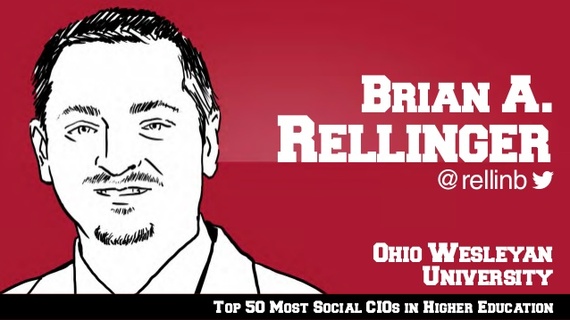
Google Glass is finding its way into almost every industry, with applications in healthcare, construction, gaming, tourism, and law enforcement. Gartner believes that smartglasses will save the field service industry $1 billion per year. One domain that is especially ripe for Google Glass innovation is education. I spoke with Brian A. Rellinger, CIO Ohio Wesleyan University about the ways Glass can be used on campus. The OWU Information Services Department purchased Google Glass in March, 2014 and started brainstorming about ways to use it with a cross section of campus groups. Since Glass is a new technology, the ideas continue to multiply as individuals gain hands-on experience. Even so, the faculty, staff, and students at OWU came up with a diverse list of initial ideas.
Based on the OWU list, here are 14 ways that Google Glass can improve higher education. Each idea may not be a fit for every campus, but hopefully it can help start the discussion for new or potential Glass owners. Do you have more ideas? Feel free to tweet them to us at @ValaAfshar and @rellinb.
- Incorporate Glass into college athletics. Football, baseball, basketball players, for example, can wear Glass during practice. The coach can give them realtime instructions. Players can view recordings to understand their head and body movements. Also, spectators can join the hangout to experience the sport from the player's first person perspective. Tennis and football QB examples.
- Ask alumni or others to wear Glass during performances in the arts and other intense professional activities, so students can experience the performance and participate remotely. See video with chef Roy Choi.
- Give students realtime interactive (and subsequently recorded) field trip experiences to difficult-to-reach places like the Large Hadron Collider (CERN); the Oval Office; a war zone; Federal Reserve Bank; Mt. Everest; Tibet, Papua, New Guinea; Cheyenne Mountain; Antarctica; Egyptian pyramids.
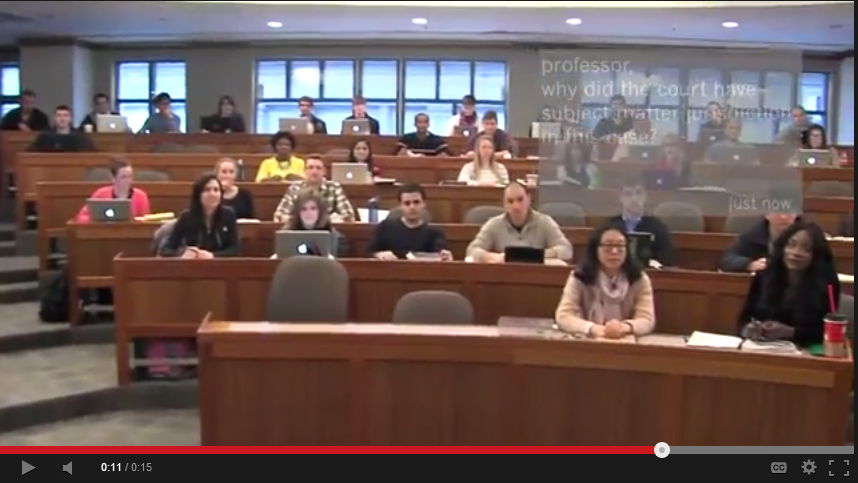
- Professor can wear Glass during lectures and open up a hangout so students can participate remotely. Glass can also provide a back-up resource to the professor to call up more detailed impromptu content as required by student questions. Can also be used by student teachers to help them as they learn to teach.
- Experiment with QR codes around campus to display location specific information, such as classes taught in a particular room. Google Glass quickly interprets the QR codes.
- Students sitting in lectures can use Glass to help take notes and bookmark important passages, as well as to view extra-classroom content provided to them by the lecturing professor. Glass can provide realtime language translation for foreign students.
- Lend to visiting students and prospects for self-guided tours of the campus. Glass will (with added functionality) automatically point out landmarks within the student's vision, explain history, and answer questions.
- Invite remote prospective students to tour the campus via a live Hangout with a Glass-wearing guide.
- Provide a simulated (virtual reality) experience to students of intense events such as in an operating room, on the athletic field, or in outer space. In these cases, the wearer is the one directly participating in the simulation, rather than watching as someone else participates.
- Provide live first-person experience of graduation, by having a student wear Google Glass throughout the ceremony and convocation.
- Professors can use Glass to receive questions from students during their lectures. Andrew Perlman of Suffolk University Law School describes how students who may be reluctant to speak up in class can text their questions directly to the professor who views the texts with Glass. It is even possible topoll the student audience to see if they are grasping difficult concepts during the lecture.
- Professors and instructors can use a Glassware app like Speech Helper to view their slide notes during a slide show presentation and can also control the slides("Ok, glass. Slide Remote").
- Create a course or club to teach students how to design Glassware apps.
- Develop a Glassware app to take attendance and pull recent grades of students to assist faculty in the classroom.
There is another aspect to Google Glass and other wearables in education that has a disruptive effect on what students are taught and how they are tested. Stephen diFilipo, CIO at Cecil College, notes that, "With wearables every test becomes open book. The phrase don't teach that which can be Googled has become a familiar cry for those advancing education reform."
Melissa Woo, Vice Provost for Information Services and CIO at the University of Oregon and an early Google Glass Explorer stresses that higher education has a vital role to play in the field of wearable computing, that goes beyond just using the technology: "Higher education is an important area for experimentation with Glass and other wearables, not only because they enhance teaching, but because they help us understand how we should best interact with and incorporate these technologies into our society's future."
Follow Vala Afshar on Twitter: www.twitter.com/ValaAfshar
Wednesday, June 4, 2014
Why China and America are Headed Toward a Catastrophic Clash
By Hugh White Professor of Strategic Studies, National University of Australia; author “The China Choice: Why We Should Share Power.”

This article also appears in The Interpreter, the journal of the Lowy Institute in Australia.
Many people find it hard to understand why China is acting the way it is in the East and South China Seas. What does Beijing hope to achieve by alienating its neighbors and undermining regional stability?
Let me suggest an answer: China is trying to build what President Xi Jinping calls "a new model of great power relations." To understand how this might be the aim of Beijing's actions, we have to recognize that under his "new model," Xi wants China to wield much more power and influence in Asia than it has for the past few centuries. These things are inherently zero-sum, so for China to have more power and influence, America must have less. This is what Xi and his colleagues are trying to achieve.
Their reasoning is simple enough. They know that America's position in Asia is built on its network of alliances and partnerships with many of China's neighbors. They believe that weakening these relationships is the easiest way to weaken U.S. regional power. And they know that, beneath the flowery diplomatic phrases, the bedrock of these alliances and partnerships is the confidence America's Asian friends have that America is able and willing to protect them from China's power.
So the easiest way for Beijing to weaken Washington's power in Asia is to undermine this confidence. And the easiest way to do that is for Beijing to press those friends and allies hard on issues in which America's own interests are not immediately engaged -- like a string of maritime disputes in which the U.S. has no direct stake.
By using direct armed pressure in these disputes, China makes its neighbors more eager for U.S. military support, and at the same time makes America less willing to give it, because of the clear risk of a direct U.S.-China clash. In other words, by confronting America's friends with force, China confronts America with the choice between deserting its friends and fighting China. Beijing is betting that, faced with this choice, America will back off and leave its allies and friends unsupported. This will weaken America's alliances and partnerships, undermine U.S. power in Asia, and enhance China's power.
This view of China's motives explains its recent conduct.
Ever since President Obama announced the "pivot," China has tested U.S. willingness to support its allies over the Scarborough Shoals and Senkaku/Daioyu disputes. Until his Asian trip last month, Obama seemed inclined to step back from America's commitments, but his bold words in Tokyo and Manila suggest he has recovered his resolve to stand firm.
Now we can expect China to test this newly-recovered resolve by applying more pressure in the same places or elsewhere. And that is what Beijing is doing today in the waters off Vietnam. It is calling Obama's bluff. Expect more pressure against Manila and Tokyo soon.
Of course this carries risks for China. It does not want to fight America, so it must be confident in the judgment that America will back down and desert its friends rather than engage in conflict with China, even if backing down badly weakens the U.S. position in Asia. This confidence reflects two key judgments by China's leaders.
First, they believe that China's new anti-access/area denial capabilities can deny America a quick and easy victory in an maritime clash in the East Asian littoral waters. They have been reassured by America's own Air-Sea Battle doctrine that the U.S. knows it cannot prevail in these waters without launching a major campaign of strikes against Chinese territory. Such strikes would obviously risk a major escalation which might not stop below the nuclear threshold. So China's leaders think their U.S. counterparts understand that a war with China today is one that America could not be confident of either winning or limiting.
Second, Beijing believes the balance of resolve is on China's side. Washington clearly wants to preserve its role in Asia, but Beijing is even more determined to win power at the U.S.' expense. China's conduct suggests that the leadership in Beijing believes Washington understands this imbalance of resolve. That makes the Chinese confident that U.S. leaders will not assume that China would back down first in a crisis.
The idea that China might believe these things comes as a surprise to many outside China, including, one suspects, many in Washington. U.S. policy towards China, including the pivot itself, is based on contrary assumptions. The consensus is that Beijing is not really serious about challenging U.S. leadership in Asia because it is simply not willing to risk a confrontation with America which Beijing's leaders must know they would lose, and they do not care enough about expanding China's role in Asia to take that risk.
If that's true, then China's conduct is clearly foolish. But before assuming that the Chinese leaders are fools, we would be wise to wonder whether they really do believe what Washington assumes they believe. I'm pretty sure they do not.
Asia today therefore carries the seeds of a truly catastrophic episode of mutual misperception. Both Washington and China are steadily upping the stakes in their rivalry as China's provocations of US friends and allies become more flagrant and America's commitments to support them become more categorical.
Both believe they can do this with impunity because both believe the other will back down to avoid a clash. There is a disconcertingly high chance that they are both wrong.
Someone needs to change the nature of the game to avert the risk of disaster.
Start with a Theory, Not a Strategy
by Todd Zenger
Well-crafted strategies are road maps to places that yield competitive advantage and generate value for the firm. But once you’ve arrived, they don’t take you anyplace else. That’s a problem for companies under continual pressure from investors to find new sources of competitive advantage.
I recently had lunch with the CEO of a large privately held corporation that illustrated this dilemma. After two decades of strong growth, he recognized that that his strategy had run its course. In the minds of his investors, his success was baked into his company’s current value and they wanted to know where he was going to find more.
He presented to me three broad options for growth: diversify into a rather distant, weakly-related industry; develop and sell new services desired by their somewhat narrow set of existing customers; or expand globally into the same services they provide domestically. He asked which I thought made the most sense.
Of course, I did not give him a straight answer. Instead, I suggested that what he needed was a theory about strategy: a mental model about how his company could create value that would help him assess his three options.
In science, a good theory reveals compelling hypotheses that subsequent experiments will validate. A good corporate theory similarly reveals likely hypotheses about how the firm can create most value. It has three components:
Foresight into the future evolution of their industry,
Insight into what is distinctive and uniquely valuable in the composition of assets and capabilities the company possesses; and
Cross-sight into how combinations of internal and external assets and opportunities can create value.
For a company that has a good corporate theory, selecting the right next strategy should not be a problem; the fact that this CEO and I were having such a conversation about such divergent options revealed the absence of a good theory about what strategies were right for his firm.
I’m not going to pretend that it’s easy to come up with a good corporate theory. And, if anything, companies that have comfortable market positions will find the exercise more challenging than most. Microsoft is a case in point. Although it attained a remarkable position almost decades ago, the company has struggled to find new sources of value creation.
In the long run, firms compete not on their strategies, but on the basis of their corporate theories. For the past several years I have asked students ranging from executives to undergraduates the simple question: If you were given $10,000 to invest in Google, Apple, Facebook, or Amazon, where would you invest?
While the pattern of responses varies, most students quickly recognize that their answers have less to do with assessments of current market positions, and more to do with assessments of each firm’s corporate theory.
Each firm is entrenched in a market position quite distant from the others. Apple makes consumer electronics unrivaled in their ease of use. Google offers a search engine unparalleled in its speed and breadth. Facebook supports a social network unmatched in its reach. Amazon features a web store without equal in scope. But each is guided by a very different corporate theory, distinctly crafted as a reflection of the beliefs and current assets of their firm, which informs how they will move beyond their established and fully valued positions.
These theories (ideally) provide a sense of coherence to the growth initiatives that have pushed these firms into quite disparate and increasingly overlapping market space. Indeed, their theories seem to suggest no limit to the potential for strategic collision. Future results of strategic actions will ultimately determine the worth and accuracy of each firm’s theory.
Bottom line, unlike a strategy, a well-crafted corporate theory can take you beyond the one position or advantage. This is not to say that your theory will necessarily be the best one, but at least it will not be dead on arrival.
(Sources - http://blogs.hbr.org/2014/06/start-with-a-theory-not-a-strategy/)
Well-crafted strategies are road maps to places that yield competitive advantage and generate value for the firm. But once you’ve arrived, they don’t take you anyplace else. That’s a problem for companies under continual pressure from investors to find new sources of competitive advantage.
I recently had lunch with the CEO of a large privately held corporation that illustrated this dilemma. After two decades of strong growth, he recognized that that his strategy had run its course. In the minds of his investors, his success was baked into his company’s current value and they wanted to know where he was going to find more.
He presented to me three broad options for growth: diversify into a rather distant, weakly-related industry; develop and sell new services desired by their somewhat narrow set of existing customers; or expand globally into the same services they provide domestically. He asked which I thought made the most sense.
Of course, I did not give him a straight answer. Instead, I suggested that what he needed was a theory about strategy: a mental model about how his company could create value that would help him assess his three options.
In science, a good theory reveals compelling hypotheses that subsequent experiments will validate. A good corporate theory similarly reveals likely hypotheses about how the firm can create most value. It has three components:
Foresight into the future evolution of their industry,
Insight into what is distinctive and uniquely valuable in the composition of assets and capabilities the company possesses; and
Cross-sight into how combinations of internal and external assets and opportunities can create value.
For a company that has a good corporate theory, selecting the right next strategy should not be a problem; the fact that this CEO and I were having such a conversation about such divergent options revealed the absence of a good theory about what strategies were right for his firm.
I’m not going to pretend that it’s easy to come up with a good corporate theory. And, if anything, companies that have comfortable market positions will find the exercise more challenging than most. Microsoft is a case in point. Although it attained a remarkable position almost decades ago, the company has struggled to find new sources of value creation.
In the long run, firms compete not on their strategies, but on the basis of their corporate theories. For the past several years I have asked students ranging from executives to undergraduates the simple question: If you were given $10,000 to invest in Google, Apple, Facebook, or Amazon, where would you invest?
While the pattern of responses varies, most students quickly recognize that their answers have less to do with assessments of current market positions, and more to do with assessments of each firm’s corporate theory.
Each firm is entrenched in a market position quite distant from the others. Apple makes consumer electronics unrivaled in their ease of use. Google offers a search engine unparalleled in its speed and breadth. Facebook supports a social network unmatched in its reach. Amazon features a web store without equal in scope. But each is guided by a very different corporate theory, distinctly crafted as a reflection of the beliefs and current assets of their firm, which informs how they will move beyond their established and fully valued positions.
These theories (ideally) provide a sense of coherence to the growth initiatives that have pushed these firms into quite disparate and increasingly overlapping market space. Indeed, their theories seem to suggest no limit to the potential for strategic collision. Future results of strategic actions will ultimately determine the worth and accuracy of each firm’s theory.
Bottom line, unlike a strategy, a well-crafted corporate theory can take you beyond the one position or advantage. This is not to say that your theory will necessarily be the best one, but at least it will not be dead on arrival.
(Sources - http://blogs.hbr.org/2014/06/start-with-a-theory-not-a-strategy/)
Wearable Technology: The Coming Revolution in Healthcare
By Vala Afshar Chief Marketing Officer, Extreme Networks

David Peterson - CMO Emdeon Inc.
The year 2014 may well go down as theyear of wearable technology. The impact of wearables is already being felt in education, communication, navigating, and entertainment; but perhaps the greatest potential lies in healthcare. Wearable technology has started to revolutionize healthcare by assisting doctors in the operating room and providing real timeaccess to electronic health records.
The full potential of wearable technology in healthcare, though, goes well beyond directly assisting doctors. Patients can now continuously monitor their own health. At the 2014 Consumer Electronics Show in Las Vegas, Sony, LG and Garmin introduced devices that track everything from heart rate and blood pressure to a patient's O2 saturation. By 2018, the overall number of wearable devices shipped to consumers is expected to reach 130 million. With such acceptance on the part of the public, wearables are perhaps the perfect application for healthcare.
To learn more about wearables in healthcare, I spoke with David Peterson, Chief Marketing Officer for Emdeon, a company well-experienced in linking healthcare payers, providers and vendors. David believes that the adoption of wearable healthcare-related devices could indeed be a significant step in patient engagement and improving population health -- two critical success factors driving today's increasingly complex healthcare environment. Specifically, wearable health technology brings three distinctly beneficial trends to the table -- connected information, community, and gamification. By harnessing this trifecta, healthcare leaders have new ways to build engagement and create accurate, far-reaching views of both personal and population health.

David Peterson - CMO Emdeon Inc.
Connected Information
Healthcare information has traditionally been extremely siloed. Finding ways to integrate, aggregate, and analyze disparate data can be difficult and costly, but is needed to move healthcare toward cost-effective, evidence-based treatments. Furthermore, privacy and security considerations, like HIPAA regulations, have presented technical challenges related to the exchange of healthcare data.
To successfully employ wearable health technologies, the industry must find a way to develop networks that allow information access and provide support on the back end. This is already being done on a small scale: think about users of Fitbit® and similar health and wellness tracking gear who view their personal data and compare it against data from other users.
Having a network or backbone that a much broader population base can seamlessly connect to will fuel more meaningful data comparisons and analysis and distill useful information. This may spur wearable health technology vendors to partner with organizations that have extensive national networks and access to a large volume of health claims and other patient data. Companies like Emdeon, which processes more than seven billion U.S. healthcare transactions annually, and programs like theDepartment of Veterans Affairs Blue Button initiative or the Health Data Consortiumcan play a key role. Such a network could then aggregate data from wearables with other health information -- data from across a certain geography or specific diagnosis, for example -- to create a more complete picture of group health.
Community
Creating healthcare communities from which to collect data is a way to crowd source valuable healthcare information. By bringing together people with a common interest such as weight loss, wearables serve as a mechanism to build engagement and at the same time compile information. It is a logical approach: The more you know about a population's health, the more steps you can take to keep them healthy.
Creating healthcare communities from which to collect data is a way to crowd source valuable healthcare information. By bringing together people with a common interest such as weight loss, wearables serve as a mechanism to build engagement and at the same time compile information. It is a logical approach: The more you know about a population's health, the more steps you can take to keep them healthy.
For instance, patient data entered into electronic health records at practices and hospitals could reveal allergies, health histories, and medication use. Combined with information collected through wearables, providers will have more complete and essentially real-time data to treat and manage the health of individual patients, as well as patient populations.
Gathering data this way is somewhat like microphilanthropy, where individual donors give small amounts to charity over a period of time. The real power comes from the cumulative sum of the donations from many individuals. In healthcare, the exponentially larger pool of data about a health condition or population could prove tremendously powerful.
Gamification
With information networked and communities built, participation in wearable groups can be driven by gamifying healthcare and fitness apps. Most of us are competitors at heart, and we love a good game. Imagine the interest in competing not against three or four friends who are trying to lose weight or lower cholesterol levels, but rather against a larger group of individuals who are members of your health plan or who share a similar health condition.
With information networked and communities built, participation in wearable groups can be driven by gamifying healthcare and fitness apps. Most of us are competitors at heart, and we love a good game. Imagine the interest in competing not against three or four friends who are trying to lose weight or lower cholesterol levels, but rather against a larger group of individuals who are members of your health plan or who share a similar health condition.
Health plans might offer incentives to members willing to sign up for designated wearable health programs and join in the "game." The incentives build participation by making the competition more engaging for participants. Growing the volume of data collected has the potential to broadly improve population health.
The Future
Surprisingly enough, wearable technology dates back to the 1200s, when the first eyeglasses were made out of crystal. Fast forward a few hundred years, when Chinese artisans of the Qing Dynasty created an abacus worn as a finger ring. Today, wearable health technology comes in the form of smart clothes, including sneakers, glasses, watches, rings, and more. Regardless of what they look like or how they are worn, wearables will play an pivitol role in the future of healthcare.
As the accuracy and scope of data improve, wearables hold the potential to reduce healthcare costs by identifying trends and commonalities among certain populations -- thereby enabling better preventive care. In addition to engaging patients and aiding personal wellness, they can move healthcare beyond individual monitoring and treatment toward more effective population health management.
By engaging and empowering patients to take an active role in data collection, wearables can change the way data and analytics are used to improve health. It is fascinating to think about, just as the abacus ring must have captivated the ancient Chinese. Consider how this can become the healthcare equivalent of how Google Maps displays traffic; showing healthcare patterns based on real time reporting of anonymous data from healthcare wearable devices.
While technology may never completely replace the all-inclusive health record, a detailed diagnosis or a one-on-one dialogue between patient and provider; the data collected from these devices can provide a broader scope of information. Healthcare organizations can tap the power of that data to engage patients and develop more effective and more personalized approaches to care, thereby lowering the overall cost of care.
This post was co-authored by David Peterson, Chief Marketing Officer for Emdeon.
This post was co-authored by David Peterson, Chief Marketing Officer for Emdeon.
Friday, May 30, 2014
UiTM bantu sistem rangking dunia
Universiti Teknologi Mara (UiTM) berjaya meyakinkan badan penilai Times Higher Education-QS World University Rankings untuk mengubah corak kriteria pemilihan kedudukan ranking universiti di seluruh dunia yang mana UiTM salah satunya tidak diadili secara saksama.
Naib Canselornya, Tan Sri Prof. Ir. Dr. Sahol Hamid Abu Bakar berkata, ini kerana dua badan penilai tersebut iaitu Times Higher Education menggunakan 13 kriteria manakala QS Ranking menggunakan penilaian berdasarkan 'perseption' yang mana melihat kepada populariti sesuatu universiti.
Menurutnya, badan penilai tersebut yang terdiri daripada pakar-pakar akademik dunia mengakui telah membuat penilaian yang tidak adil ke atas UiTM dalam menentukan ranking universiti tersebut dengan meletakkan UiTM di bawah kategori sebaris dengan universiti tertua dunia.
“Pada forum di Miami di mana saya satu-satunya wakil Asia telah dijemput oleh badan penilai terbabit untuk membuat penjelasan mengapa perlu ada kategori universiti muda memandangkan UiTM sendiri tidak sepatutnya diletakkan pada kategori yang berlumba dengan universiti Oxford memandangkan UiTM baharu 15 tahun penubuhannya.
“Mereka menerima pandangan saya ini dengan baik yang mana saya telah mempersoalkan bahawa penilaian yang dibuat tidak adil untuk universiti baharu seperti UiTM dan kemungkinan tahun depan akan diperkenalkan kategori universiti muda dalam penilaian tempat universiti dunia," katanya ketika ditemui Helo Kampus di pejabatnya baru-baru ini.
Selain itu, katanya, badan tersebut juga mengakui terdapat kesilapan lain yang dibuat semasa penilaian ranking antaranya universiti hanya memulakan pengambilan peringkat ijazah pada tahun 2000 yang mana masih baharu berbanding universiti dunia lain selain membuat penilaian tidak menyeluruh berdasarkan maklumat laman web universiti tersebut.
“Pihak mereka menjemput UiTM untuk menerangkan mengenai perkara-perkara ini boleh dianggap satu pengiktirafan malah mereka menerima segala ketidakadilan yang dikemukakan terhadap UiTM. Saya terangkan kepada mereka bahawa penubuhan UiTM adalah untuk kepentingan orang-orang miskin, orang kurang upaya dan pelajar luar bandar, tidak semua universiti menawarkan perkara ini, sebaliknya lebih mementingkan pelajar terbaik daripada keluarga mewah sahaja.
“Apabila saya terangkan perkara ini kepada mereka, mereka mengakui modul UiTM adalah yang terbaik dan mereka mahu berkongsi pengalaman dan mempelajari sistem akademik yang kita amalkan ini. Dari aspek penilaian lain iaitu 25 markah bagi pengambilan pelajar asing, kita kekurangan dalam aspek itu namun jika mahu dibandingkan dengan nilai, mutu dan kualiti, UiTM ada kriteria tersebut.
“Satu perkara lagi yang menarik perhatian mereka apabila saya jelaskan bahawa lepasan pelajar UiTM tidak hanya mengharapkan kerja daripada kerajaan atau swasta kerana kita latih pelajar menjadi usahawan dan bidang keusahawanan ini satu keunikan UiTM berbanding universiti lain. Mereka bersetuju dengan pendirian kita bahawa untuk memastikan masa depan negara maju, kemenjadian pelajar menjadi usahawan adalah penting," jelasnya.
Kejayaan UiTM itu, kata Sahol Hamid, telah berjaya mencuri perhatian Perdana Menteri, Datuk Seri Najib Tun Razak yang mahu berkongsi pengalaman dan 'senjata' yang digunakan oleh UiTM sehingga berjaya menarik minat badan penilai antarabangsa terbabit mempelawa beliau menyertai forum perbincangan mengenai perkara itu.
Pada masa yang sama, Sahol Hamid menyelar mana-mana pihak yang mempersoalkan kedudukan ranking universiti itu tanpa mengetahui dengan lebih jelas mengenai kriteria dan maklumat berkaitan dengannya malah mengeluarkan tohmahan yang tidak berasas terhadap keupayaan universiti tersebut.
“Jangan salah faham ranking dan mahu menjatuhkan kewibawaan sesebuah universiti itu kerana hanya orang yang cetek pemikiran dan tidak faham ilmu sahaja boleh membuat tohmahan sedemikian, saya cadangkan eloklah individu berkenaan mendiamkan diri daripada membuat tuduhan melulu.
“Jika tiga universiti dunia mengiktiraf UiTM dan mengaku sendiri silap dalam meletakkan UiTM dalam kategori penilaian ranking, apa lagi yang perlu dibuktikan oleh pihak ini," katanya.
Artikel Penuh: http://www.utusan.com.my/utusan/Kampus/20140526/ka_02/UiTM-bantu-sistem-rangking-dunia#ixzz33AK47zah
© Utusan Melayu (M) Bhd
Thursday, May 8, 2014

Monday, May 5, 2014

Internet History - Massachusetts Institute of Technology (MIT) Contributions to the world.

1963
1964
1965
1966
1968
1969
|


Thursday, March 27, 2014
Data Point: Tech’s Billion-Dollar Deal Club

The ink is barely dry on the FacebookFB -7.46%-WhatsApp headlines and the social network dropped another stunner of a deal: $2 billion for Oculus VR.
The deal for Oculus, which makes a virtual-reality headset called Oculus Rift, is just the latest 10-figure tie-up for the nation’s tech giants. Go back to 2006 and you can findGoogle'sGOOG -2.36% deal for YouTube, then a head-turning $1.6 billion.
In recent years, hefty deals are heating up, data compiled by Statista show. Facebookalready is shelling out $19 billion for the messaging app WhatsApp, while Google earlier this year dropped $3.2 billion for the smart-device gadget maker Nest.
– Brian R. Fitzgerald
(Source - http://blogs.wsj.com)
Tuesday, March 25, 2014
Usul #MH370 di Parlimen
"Tuan Yang Dipertua, saya memohon mencadangkan satu usul seperti berikut :
"Bahawa dewan yang mulia ini menzahirkan perasaan yang amat sedih, dukacita dan pilu terhadap tragedi malang yang menimpa penumpang-penumpang dan anak-anak kapal pesawat #MH370 Syarikat Penerbangan Malaysia (MAS).
"Bahawasanya dewan yang mulia ini merakamkan ucapan takziah yang amat sangat kepada seluruh keluarga, rakan dan kenalan, penumpang dan anak-anak kapal pesawat MH370 tersebut.
"Bahawasanya dewan yang mulia ini juga menyatakan ucapan terima kasih yang tidak terhingga kepada semua pihak yang terlibat dalam memberikan kerjasama dan bantuan dalam operasi mencari dan menyelamat (SAR) khususnya kepada negara-negara luar yang telah banyak memberi bantuan dalam operasi tersebut.
"Dan bahawasanya dewan yang mulia ini merakamkan setinggi penghargaan dan terima kasih di atas segala komitmen dan pengorbanan yang tinggi oleh semua petugas serta anggota yang terbabit dalam operasi SAR ini."
"Tuan Yang Dipertua, saya percaya ahli-ahli Yang Berhormat telahpun mengikuti kenyataan-kenyataan rasmi yang telah dikeluarkan sejak tragedi MH370 berlaku pada pagi 8 Mac.
"Kenyataan malam tadi (24 Mac) yang saya telah keluarkan dengan jelas menunjukkan bahawa kita telah pun memperoleh tanda-tanda berdasarkan pada analisis satelit yang boleh dikatakan konklusif bahawa pesawat MH370 telah pun berakhir di selatan Lautan Hindi.
"Oleh itu apa yang perlu kita lakukan dalam minggu-minggu dan mungkin bulan-bulan yang akan datang ini ialah untuk mencari segala serpihan rangka serta objek-objek yang berkaitan dengan pesawat MH370 supaya kita boleh mengesahkan tanpa ragu-ragu bahawa kapal terbang tersebut telahpun hilang di selatan Lautan Hindi.
"Kerajaan sejak tragedi ini berlaku telah mengambil langkah-langkah yang terselaras dengan semua agensi-agensi yang terlibat.
"Di samping itu, kita telah berpegang kepada prinsip bahawa apa sahaja kenyatan yang kita buat semestinya disahkan terlebih dahulu sebelum ia dikeluarkan secara rasmi oleh pihak kerajaan."
"Kita tidak ada niat sama sekali untuk menghalang ataupun menutup sebarang maklumat daripada disampaikan kepada keluarga-keluarga mangsa ataupun pengetahuan umum.
"Berkali-kali kita katakan bahawa insiden ataupun kes ini tidak pernah berlaku sebelum ini di dalam sejarah penerbangan.
"Oleh itu, saya ingin menegaskan bahawa langkah-langkah kita amatlah sesuai dan tepat yang telah kita lakukan. Kita telah juga mendapatkan kerjasama yang luar biasa daripada 26 buah negara.
"Saya sendiri telah menelefon ramai pemimpin negara luar dan setiap yang saya hubungi telah menyatakan kesanggupan untuk memberi kerjasama yang sepenuhnya, dan mereka telahpun mengarahkan agensi-agensi mereka untuk memberi kerjasama dari segi maklumat radar, maklumat satelit dan juga mengarahkan aset-aset mereka digunakan dalam operasi SAR mengikut kemampuan negara tersebut.
"Dengan ini, maka operasi SAR telah dilancarkan dan telahpun diubah kawasan cariannya mengikut maklumat terkini yang kita telah peroleh.
"Saya sedar bahawa bukan mudah bagi keluarga-keluarga penumpang dan anak kapal MH370 menghadapi insiden ini dan kita sedar bahawa kita perlu memberi kepuasan kepada mereka dengan secepat mungkin.
"Oleh itu priority (keutamaan) kita setelah dapat sahkan bahawa kejadian itu berlaku di kawasan selatan Lautan Hindi bahawa segala tumpuan sekarang ini diberikan pada kawasan tersebut.
"Pagi tadi sekali lagi saya telah menerima panggilan telefon daripada Perdana Menteri Australia Tony Abbot dan beliau menyatakan pada saya bahawa sokongan dan kerjasama bantuan Australia akan diberikan secara berterusan sehingga kita dapat mencari dan mengesan pesawat MH370.
"Tidak dapat dinafikan kawasan tersebut adalah amat sukar dan amat mencabar sekali, ini bererti bahawa kita akan menghadapi dugaan dan cabaran yang luar biasa untuk mencari serpihan rangka serta objek-objek berkaitan dengan pesawat MH370.
"Pada masa ini kita telah menerima pelbagai cadangan antaranya ialah untuk berkabung dengan menurunkan separuh tiang bendera kita dan sebagainya."
(Sumber - Sdr Ibdilillah Ishak)
"Bahawa dewan yang mulia ini menzahirkan perasaan yang amat sedih, dukacita dan pilu terhadap tragedi malang yang menimpa penumpang-penumpang dan anak-anak kapal pesawat #MH370 Syarikat Penerbangan Malaysia (MAS).
"Bahawasanya dewan yang mulia ini merakamkan ucapan takziah yang amat sangat kepada seluruh keluarga, rakan dan kenalan, penumpang dan anak-anak kapal pesawat MH370 tersebut.
"Bahawasanya dewan yang mulia ini juga menyatakan ucapan terima kasih yang tidak terhingga kepada semua pihak yang terlibat dalam memberikan kerjasama dan bantuan dalam operasi mencari dan menyelamat (SAR) khususnya kepada negara-negara luar yang telah banyak memberi bantuan dalam operasi tersebut.
"Dan bahawasanya dewan yang mulia ini merakamkan setinggi penghargaan dan terima kasih di atas segala komitmen dan pengorbanan yang tinggi oleh semua petugas serta anggota yang terbabit dalam operasi SAR ini."
"Tuan Yang Dipertua, saya percaya ahli-ahli Yang Berhormat telahpun mengikuti kenyataan-kenyataan rasmi yang telah dikeluarkan sejak tragedi MH370 berlaku pada pagi 8 Mac.
"Kenyataan malam tadi (24 Mac) yang saya telah keluarkan dengan jelas menunjukkan bahawa kita telah pun memperoleh tanda-tanda berdasarkan pada analisis satelit yang boleh dikatakan konklusif bahawa pesawat MH370 telah pun berakhir di selatan Lautan Hindi.
"Oleh itu apa yang perlu kita lakukan dalam minggu-minggu dan mungkin bulan-bulan yang akan datang ini ialah untuk mencari segala serpihan rangka serta objek-objek yang berkaitan dengan pesawat MH370 supaya kita boleh mengesahkan tanpa ragu-ragu bahawa kapal terbang tersebut telahpun hilang di selatan Lautan Hindi.
"Kerajaan sejak tragedi ini berlaku telah mengambil langkah-langkah yang terselaras dengan semua agensi-agensi yang terlibat.
"Di samping itu, kita telah berpegang kepada prinsip bahawa apa sahaja kenyatan yang kita buat semestinya disahkan terlebih dahulu sebelum ia dikeluarkan secara rasmi oleh pihak kerajaan."
"Kita tidak ada niat sama sekali untuk menghalang ataupun menutup sebarang maklumat daripada disampaikan kepada keluarga-keluarga mangsa ataupun pengetahuan umum.
"Berkali-kali kita katakan bahawa insiden ataupun kes ini tidak pernah berlaku sebelum ini di dalam sejarah penerbangan.
"Oleh itu, saya ingin menegaskan bahawa langkah-langkah kita amatlah sesuai dan tepat yang telah kita lakukan. Kita telah juga mendapatkan kerjasama yang luar biasa daripada 26 buah negara.
"Saya sendiri telah menelefon ramai pemimpin negara luar dan setiap yang saya hubungi telah menyatakan kesanggupan untuk memberi kerjasama yang sepenuhnya, dan mereka telahpun mengarahkan agensi-agensi mereka untuk memberi kerjasama dari segi maklumat radar, maklumat satelit dan juga mengarahkan aset-aset mereka digunakan dalam operasi SAR mengikut kemampuan negara tersebut.
"Dengan ini, maka operasi SAR telah dilancarkan dan telahpun diubah kawasan cariannya mengikut maklumat terkini yang kita telah peroleh.
"Saya sedar bahawa bukan mudah bagi keluarga-keluarga penumpang dan anak kapal MH370 menghadapi insiden ini dan kita sedar bahawa kita perlu memberi kepuasan kepada mereka dengan secepat mungkin.
"Oleh itu priority (keutamaan) kita setelah dapat sahkan bahawa kejadian itu berlaku di kawasan selatan Lautan Hindi bahawa segala tumpuan sekarang ini diberikan pada kawasan tersebut.
"Pagi tadi sekali lagi saya telah menerima panggilan telefon daripada Perdana Menteri Australia Tony Abbot dan beliau menyatakan pada saya bahawa sokongan dan kerjasama bantuan Australia akan diberikan secara berterusan sehingga kita dapat mencari dan mengesan pesawat MH370.
"Tidak dapat dinafikan kawasan tersebut adalah amat sukar dan amat mencabar sekali, ini bererti bahawa kita akan menghadapi dugaan dan cabaran yang luar biasa untuk mencari serpihan rangka serta objek-objek berkaitan dengan pesawat MH370.
"Pada masa ini kita telah menerima pelbagai cadangan antaranya ialah untuk berkabung dengan menurunkan separuh tiang bendera kita dan sebagainya."
(Sumber - Sdr Ibdilillah Ishak)
Subscribe to:
Posts (Atom)